The Modern Face of Ticket Fraud & Scalping in 2026
From Street Scalpers to Sophisticated Schemes
The ticketing battlefield has moved online. What used to be a few individuals hawking tickets outside the venue has morphed into global, tech-driven operations. Scalpers now deploy armies of automated bots and fake accounts to snatch up tickets in milliseconds. Recent data reveals over 83% of traffic on ticketing sites is automated, and nearly one-third of that is malicious scalping bots, as detailed in a comprehensive guide to anti-scalping platforms. These bots swarm on-sales the instant tickets go live, sometimes buying out entire sections in seconds before human fans can even click. In one notorious case, a U.S. broker ring used thousands of fake accounts to acquire 379,000+ tickets (worth nearly $57 million) for popular tours, an operation of staggering scale – an industrial-scale heist that left genuine fans empty-handed.
The Human Cost: Fans and Venues Suffer
Ticket fraud and scalping don’t just hurt your bottom line – they punish your loyal fans and damage your venue’s reputation. Studies estimate nearly 5 million people buy fake tickets each year, resulting in millions in lost revenue and untold heartbreak for fans duped out of their money, leading to unhappy attendees and negative press. A UK survey found one in four event-goers has been a victim of ticket scams, with reported losses surging 50% from 2023 to reach £9.7 million in 2024, showing that scammers are getting bolder. The fallout hits on multiple fronts:
- Priced-Out Fans: True supporters are often shut out when bots hoard inventory and resale prices skyrocket. A venue might “sell out” every seat, yet see empty sections because real fans were priced out or afraid of fakes, which can create chaos at the gates. This undercuts the inclusive spirit of live events and leaves seats unfilled that genuine fans would have gladly bought at face value.
- Fraud Victims at the Gate: Counterfeit or invalid tickets lead to heartbreaking scenes on show night. Would-be attendees arrive excited, only to be denied entry when their tickets won’t scan. They discover they paid hundreds for a worthless PDF or screenshot. Their anger and disappointment often get directed at venue staff and management, damaging trust that is hard to regain once lost. Front-line staff then have to handle these emotional confrontations, which can create chaos and delays at entry.
- Reputation Damage: News of rampant ticket scams or blatant scalping can seriously tarnish a venue’s brand. If your venue gains a reputation as a place where “it’s impossible to get tickets” or fans keep getting ripped off, future sales will suffer, as reputation damage from scams spreads. Trust, once lost, is hard to regain. Fans might skip your events entirely, fearing they’ll either be out-botted by scalpers or stuck with fakes. In the age of social media, such stories spread like wildfire, harming your relationship with the community.
- Safety & Compliance Risks: Fraud and scalping can even pose safety hazards. Oversold events (when duplicate or fake tickets circulate) can lead to dangerous overcrowding, while large groups of disappointed fans outside the venue increase the risk of unrest. Handling a swarm of upset patrons with invalid tickets becomes a crowd management challenge – one that ties directly into a venue’s emergency preparedness and security protocols, proving that trust is hard to regain. (This is why anti-fraud measures are now considered part of modern venue emergency preparedness.)
Real-world examples illustrate the stakes. Major tours – from K-pop in Seoul to Broadway shows in New York – have been marred by scalper bots flooding sales, leaving thousands of genuine fans empty-handed. In one high-profile fiasco, thousands of Taylor Swift fans were locked out by clashing bots and demand, fueling public outcry about ticketing practices. On the fraud side, scammers have created fake event pages and counterfeit tickets for everything from EDM festivals in Las Vegas to small cultural events in Singapore. Even prestigious venues are not immune: Hong Kong police recently busted a group (including a teenager) running a $1.8 million ticket fraud scheme around a new arena’s grand opening, and these cases underscore how prevalent scalping has become. And in Taiwan, prosecutors indicted 11 people in a long-running operation that snatched 13,000 tickets since 2016, proving scalping is a worldwide issue. If iconic arenas and global tours can be hit by scams at this scale, no venue – big or small – can afford complacency.
Keep Tickets in Fans' Hands
Our secure resale marketplace lets attendees exchange tickets at face value, eliminating scalping while keeping you in control of the secondary market.
Industry Insight: Analysts estimate the secondary ticket market was generating over $15 billion annually by the mid-2020s – money largely bypassing venues, artists, and promoters, causing frustration beyond just lost revenue. Every time a scalper resells a ticket at 5-10× its face value, those extra dollars line the scalper’s pockets instead of supporting the event. For example, Bruce Springsteen’s Broadway show grossed $106 million at the box office, but saw average resale prices near $1,800 – none of that markup went to the venue or artist, meaning fans pay exorbitant sums to attend. Combatting scalping isn’t just fan-friendly, it’s financially essential if you want revenue to fund your venue’s growth and artists’ livelihoods instead of enriching brokers.
A Multi-Layered Defense is Now a Must
By 2026, it’s clear that ticket fraud and scalping require a proactive, multi-layered defense. There is no single magic switch to flip – winning this fight means combining technology, smart policies, staff vigilance, and fan cooperation. As an experienced venue operator will tell you, staying one step ahead of scammers is now a continuous part of the job. The good news? New tools and strategies are emerging that can significantly tilt the odds in your favor. Modern ticketing platforms, venue networks, and even lawmakers are all joining the battle:
Ready to Sell Tickets?
Create professional event pages with built-in payment processing, marketing tools, and real-time analytics.
- Ticketing Platforms Investing in Security: Leading primary ticketing providers have rolled out anti-bot features, dynamic ticket controls, and better buyer verification. (For example, the latest systems can detect bot traffic patterns and inject challenges to weed them out.) Venue managers should fully leverage their ticketing platform’s anti-scalping capabilities – from personalized ticket options to secure resale integrations – as part of an overall strategy.
- Heightened Legal Scrutiny: Governments are beginning to crack down on unethical resale. Using bots to buy tickets is illegal in countries like the USA, UK, and Australia (though enforcement varies). Some regions have introduced caps on resale prices or outright bans on selling above face value. In late 2025, the UK government moved to ban ticket resale above face value as a measure to protect fans, ensuring the time they’re advertising tickets is accurate. And in the U.S., independent venue associations like NIVA have been calling for bans on speculative ticket listings and price gouging – stressing that unchecked scalping undermines fan trust and the entire live events ecosystem, insisting business as usual cannot continue. They also note that StubHub’s CEO could not be reached.
- Industry Collaboration: Venue operators are banding together through groups like the International Association of Venue Managers (IAVM) and Music Venue Trust to share best practices for fraud prevention. When one venue discovers a new anti-fraud tactic or if a scam trend emerges, the word spreads quickly through industry forums. This collective effort means you don’t have to fight alone – you can learn from others’ hard-won lessons.
- Artist and Fan Pushback: Artists are increasingly vocal about protecting fans from predatory resellers. Some stars now insist on anti-scalping measures as part of their tour agreements. Fan-driven campaigns also rally around “fair tickets” – savvy customers applaud venues that take a stand against scalpers. Embracing this stance can actually become a marketing asset for your venue as fans spread the word that you’re on their side.
- Ticketing Platforms Investing in Security: Leading primary ticketing providers have rolled out anti-bot features, dynamic ticket controls, and better buyer verification. (For example, the latest systems can detect bot traffic patterns and inject challenges to weed them out.) Venue managers should fully leverage their ticketing platform’s anti-scalping capabilities – from personalized ticket options to secure resale integrations – as part of an overall strategy.
- Heightened Legal Scrutiny: Governments are beginning to crack down on unethical resale. Using bots to buy tickets is illegal in countries like the USA, UK, and Australia (though enforcement varies). Some regions have introduced caps on resale prices or outright bans on selling above face value. In late 2025, the UK government moved to ban ticket resale above face value as a measure to protect fans, ensuring the time they’re advertising tickets is accurate. And in the U.S., independent venue associations like NIVA have been calling for bans on speculative ticket listings and price gouging – stressing that unchecked scalping undermines fan trust and the entire live events ecosystem, insisting business as usual cannot continue. They also note that StubHub’s CEO could not be reached.
- Industry Collaboration: Venue operators are banding together through groups like the International Association of Venue Managers (IAVM) and Music Venue Trust to share best practices for fraud prevention. When one venue discovers a new anti-fraud tactic or if a scam trend emerges, the word spreads quickly through industry forums. This collective effort means you don’t have to fight alone – you can learn from others’ hard-won lessons.
- Artist and Fan Pushback: Artists are increasingly vocal about protecting fans from predatory resellers. Some stars now insist on anti-scalping measures as part of their tour agreements. Fan-driven campaigns also rally around “fair tickets” – savvy customers applaud venues that take a stand against scalpers. Embracing this stance can actually become a marketing asset for your venue as fans spread the word that you’re on their side.
Before diving into specific tactics, let’s summarize the common threats and the arsenal of countermeasures we’ll explore in this guide:
| Common Ticket Scam/Scalping Tactics | What It Looks Like | Venue Countermeasures |
|---|---|---|
| Bots & Automated Buying | Sophisticated scripts buying large volumes of tickets instantly. | Bot detection systems, CAPTCHAs, queueing systems, purchase limits. |
| Bulk Buying by Fake Accounts | Rings of fake user accounts hoarding tickets (sometimes hundreds). | Identity verification, requiring verified fan registration, cancelling suspicious orders. |
| Counterfeit Tickets (Print or Digital) | Fake PDFs or screenshots sold as “real” tickets (often via social or classifieds). | Secure ticket tech (unique QR/barcodes, dynamic codes), robust scanning that invalidates copies, fan education on identifying genuine tickets. |
| Stolen Ticket PDFs/QR | One real ticket sold to multiple people by sharing the same code. | Dynamic QR codes that refresh, device-locking tickets, rapid invalidation after scan. |
| Phishing & Fake Event Pages | Scam websites or social media pages impersonating the venue or event, luring fans to buy fake tickets. | Monitoring and takedowns of fake pages (in partnership with platforms), official communication to fans about authorized channels only. |
| Unauthorized Resale at High Markups | Tickets resold on secondary sites at 5-10× face value. | Official resale platform with price caps, strict resale terms (void tickets sold above cap), legal action against large-scale profiteers. |
| “Speculative” Ticket Listings | Brokers list tickets for sale before they have them (often immediately after an event is announced). | Releasing tickets in controlled waves (less pre-sale info to exploit), publicly warning fans about speculative sales, working with authorities to ban such practices. |
| Credit Card Fraud Purchases | Scammer buys tickets with stolen cards, then resells; later chargebacks leave the venue unpaid. | 3D Secure payment verification, AI fraud screening on purchases, holding tickets for manual review if high-risk signals, requiring pickup with ID/card for certain orders. |
| On-Site Scalping & Fake Wristbands | Individuals around the venue selling fake or void tickets, or using forged credentials to enter. | Visible security presence, “No Scalping” zones enforced around venue, staff trained to spot fake physical tickets/passes, wristband security features (holograms, RFID). |
As the table above shows, every weak link can be exploited – but venues have a corresponding tool to fortify each one. The rest of this article will break down these solutions in detail, so you can build a holistic defense that makes your tickets essentially “scam-proof.” By stacking multiple layers of protection – technical, operational, and educational – you’ll dramatically reduce fraud and scalping at your venue.
Secure Ticketing Technology: Harder to Fake, Harder to Scalpel
Modern problems require modern solutions. One of the most effective ways to thwart ticket fraud is rendering the tickets themselves extremely difficult to duplicate or reuse illegally. If a scammer can’t counterfeit or copy your tickets, they can’t sell fakes – and if a scalper can’t easily transfer a ticket to an unsuspecting buyer, it undermines their business model. Here’s how venues in 2026 are using cutting-edge ticket technology to stay one step ahead.
Unique Barcodes and Dynamic QR Codes
At minimum, every ticket – whether mobile, PDF, or physical – should carry a unique, encrypted barcode or QR code that gets validated at entry. Once scanned, that code is marked as used in the system, so it cannot be reused or scanned on another device. This basic “one ticket, one scan” practice has been standard for years, but scammers found workarounds by distributing copies of the same code to multiple people. Enter the game-changer: dynamic QR codes (aka timed barcodes).
Go Cashless With RFID Technology
Enable contactless payments, faster entry, and real-time spending analytics with RFID wristbands and NFC-enabled ticketing for your events.
Dynamic barcodes refresh periodically (for example, every 30 seconds or each minute), meaning a screenshot of the code becomes useless almost as soon as it’s taken, making it impossible to share a ticket illegally. Major venues and ticketing apps have widely adopted this approach in 2026. For instance, if a fan opens their mobile ticket an hour before the show, they’ll see a QR code that updates continuously; by the time a second person tries to use a screenshot of that ticket, the real ticket’s code has already changed, because the code is marked as used instantly. This simple but powerful feature shuts down the classic “screenshot-and-sell” scam that plagued digital ticketing for years, providing dynamic defenses against duplicates. Ticketmaster, AXS, and other big platforms rolled out rotating barcodes for high-profile tours after seeing how it thwarted unauthorized duplicates, solving a problem that has plagued events for years.
To implement dynamic codes effectively, ensure your ticketing provider supports them and educate your attendees. Fans should be instructed to access the live ticket in the official app or website right before entry (since an internet connection might be needed to refresh the code). If your venue is in an area with spotty connectivity (think outdoor festivals or underground clubs), consider solutions like cryptographic offline QR codes – these embed an encrypted timestamp that scanners can verify without real-time internet, helping attendees use an official mobile app. The technology can be complex, but leading providers (including Ticket Fairy) have built-in secure verification methods to make dynamic barcodes seamless for venues, and considering alternatives like cryptographic codes. The bottom line: a static code is a vulnerable code. By using rotating or timed barcodes, you greatly narrow the window of opportunity for any would-be fraudster to pass off copied tickets.
Grow Your Events
Leverage referral marketing, social sharing incentives, and audience insights to sell more tickets.
RFID and Smart Tickets (Beyond QR Codes)
Another robust anti-fraud option is RFID-enabled tickets or wristbands, commonly used for festivals and multi-day events. RFID (Radio Frequency Identification) chips can be embedded in wristbands, plastic cards, or even printed tickets, each carrying a unique encrypted identifier. These are very tough to clone or forge. At the entrance, attendees simply tap their wristband or card on an RFID reader, which validates the chip’s ID instantly. Many major festivals – from Coachella to Tomorrowland – now issue tamper-proof RFID wristbands that cannot be removed without destruction, making transfer or resale difficult without the organizer’s approval, making it nearly impossible to scan twice.
For venues, RFID ticketing might be overkill for a single-night concert, but it shines in certain cases. Large arenas have used RFID “smart tickets” for season passes or VIP credentials to prevent sharing. One perk is speed: RFID can speed up entry scanning (no need to find a barcode on your phone; just tap and go), reducing lines and opportunities for gate fraud. The downside is cost – RFID tickets/wristbands are pricier to produce, and you need the hardware. However, the security benefits are significant: it’s extraordinarily hard for a scammer to duplicate an encrypted RFID chip compared to a printed QR code. If your venue hosts multi-day festivals, club nights where re-entry is allowed, or high-value VIP experiences, RFID is worth considering to eliminate fake passes and uncontrolled sharing.
Advances in Digital Ticket Authentication (Blockchain & Beyond)
What about blockchain tickets or NFT-based ticketing we’ve heard about? In theory, issuing tickets as unique digital tokens on a blockchain ledger provides a transparent, tamper-proof record of ownership. Each transfer of the ticket is logged and visible, and the token itself is virtually impossible to counterfeit. A few high-profile events have experimented with NFT tickets to prevent duplication and enable controlled resales (the token can only be transferred through the official blockchain marketplace). For venues, blockchain ticketing could mean any secondary sale is tracked and perhaps even that a cut of resale revenue goes back to the organizer or artist.
Free Tool: When Should You Announce?
Pick your event date and genre — the free planner outputs a recommended announce, presale, on-sale and reminder schedule anchored to how your audience actually buys.
To implement dynamic codes effectively, ensure your ticketing provider supports them and educate your attendees. Fans should be instructed to access the live ticket in the official app or website right before entry (since an internet connection might be needed to refresh the code). If your venue is in an area with spotty connectivity (think outdoor festivals or underground clubs), consider solutions like cryptographic offline QR codes – these embed an encrypted timestamp that scanners can verify without real-time internet, helping attendees use an official mobile app. The technology can be complex, but leading providers (including Ticket Fairy) have built-in secure verification methods to make dynamic barcodes seamless for venues, and considering alternatives like cryptographic codes. The bottom line: a static code is a vulnerable code. By using rotating or timed barcodes, you greatly narrow the window of opportunity for any would-be fraudster to pass off copied tickets.
RFID and Smart Tickets (Beyond QR Codes)
Another robust anti-fraud option is RFID-enabled tickets or wristbands, commonly used for festivals and multi-day events. RFID (Radio Frequency Identification) chips can be embedded in wristbands, plastic cards, or even printed tickets, each carrying a unique encrypted identifier. These are very tough to clone or forge. At the entrance, attendees simply tap their wristband or card on an RFID reader, which validates the chip’s ID instantly. Many major festivals – from Coachella to Tomorrowland – now issue tamper-proof RFID wristbands that cannot be removed without destruction, making transfer or resale difficult without the organizer’s approval, making it nearly impossible to scan twice.
For venues, RFID ticketing might be overkill for a single-night concert, but it shines in certain cases. Large arenas have used RFID “smart tickets” for season passes or VIP credentials to prevent sharing. One perk is speed: RFID can speed up entry scanning (no need to find a barcode on your phone; just tap and go), reducing lines and opportunities for gate fraud. The downside is cost – RFID tickets/wristbands are pricier to produce, and you need the hardware. However, with strategic ticketing cash advances, the security benefits are significant: it’s extraordinarily hard for a scammer to duplicate an encrypted RFID chip compared to a printed QR code. If your venue hosts multi-day festivals, club nights where re-entry is allowed, or high-value VIP experiences, RFID is worth considering to eliminate fake passes and uncontrolled sharing.
Advances in Digital Ticket Authentication (Blockchain & Beyond)
What about blockchain tickets or NFT-based ticketing we’ve heard about? In theory, issuing tickets as unique digital tokens on a blockchain ledger provides a transparent, tamper-proof record of ownership. Each transfer of the ticket is logged and visible, and the token itself is virtually impossible to counterfeit. A few high-profile events have experimented with NFT tickets to prevent duplication and enable controlled resales (the token can only be transferred through the official blockchain marketplace). For venues, blockchain ticketing could mean any secondary sale is tracked and perhaps even that a cut of resale revenue goes back to the organizer or artist.
Other digital verification enhancements include watermarked barcodes (codes that encode extra metadata or invisible watermarks that scanners can detect, making fake code generation harder) and device-specific ticket locking (more on device fingerprinting shortly). The key principle is to maximize the security uniqueness of each ticket. As experienced venue managers say, you want your tickets to be “hard to hack and not worth the hassle” for scammers. By deploying the best ticket tech your budget and scale allow, which can often be supported by event funding solutions, you force fraudsters to either move on to an easier target or give up entirely.
Turn Fans Into Your Marketing Team
Ticket Fairy's built-in referral rewards system incentivizes attendees to share your event, delivering 15-25% sales boosts and 30x ROI vs paid ads.
Ultimately, the holy grail for operators is achieving secondary market fraud-proof ticketing. By combining device-locked assets with dynamic barcodes, you create an environment where a ticket simply cannot exist outside your approved ecosystem. If a broker tries to list that asset on an unauthorized third-party site, the underlying technology prevents the transfer of the actual entry token, rendering the scalper’s listing worthless.
To summarize some ticket tech options and their anti-fraud benefits:
| Ticket Technology | Use Case & Format | Anti-Fraud Benefit | Considerations |
|---|---|---|---|
| Dynamic QR Codes | Mobile or print-at-home tickets (QR/barcode that refreshes) | Prevents reuse of screenshots or copied codes – a scanned ticket can’t be re-presented. | Requires mobile app or connectivity for updates; educate attendees to have latest code ready. |
| Encrypted Barcodes | Mobile or paper tickets (static code with encryption) | Harder to generate fake codes that will pass validation compared to basic barcodes. | Still vulnerable if copied; best combined with one-scan invalidation. |
| RFID Wristbands/Cards | Physical wearable tickets (festivals, VIP) | Extremely hard to clone; can’t be removed and given away easily if worn as wristband. Fast scan at entry. | Higher cost per ticket; needs RFID scanners at entries; not practical for every event. |
| Blockchain (NFT) Tickets | Digital tokens (mobile wallet or app) | Verifiable digital ownership; transfers are transparent and controlled, preventing counterfeit and allowing traceable resale. | New technology – learning curve for fans, and requires reliable integration at entry. |
| Device-Locked E-Tickets | Mobile tickets tied to app/account on a device | Prevents a ticket PDF/QR from being used on another device; flags copies. Adds a layer of identity verification. | Can inconvenience legitimate transfer (if fan changes phone, etc.). Needs robust app infrastructure. |
| Holographic Physical Tickets | Printed hard tickets with holograms, UV ink, etc. | Difficult to forge physical security features; easy for staff to visually verify authenticity. | Production cost; primarily for souvenir or high-value tickets nowadays, as most venues go digital for general admission. |
Evaluating Event Ticketing Platforms: Fraud Prevention Features Comparison
Armed with secure ticket stock, you’ve solved part of the puzzle – but what about stopping scalpers from grabbing tickets in the first place? Next, we tackle how to defend your online ticket sales from bots and broker networks.
Fortifying Online Sales: Anti-Bot Measures and Smart Sale Policies
The battle against scalping is often won or lost at the point of sale. The moment your tickets go on sale is when scalpers strike hardest with bots and rapid-fire tricks. To keep them from outpacing real fans, venues must fortify the online box office with technical defenses and smart sales policies. Here’s how to make your on-sale as bot-proof and fair as possible in 2026.
Advanced Bot Detection and Rate-Limiting
Modern event ticketing systems have become much better at differentiating bots from humans – but you need to ensure these features are active and optimized for your events. Bot detection software uses patterns and signals (like superhuman clicking speed, odd browser configurations, or dozens of requests from one IP) to identify likely automated purchasers. Work closely with your ticketing provider’s tech team to enable rate-limiting (throttling how many requests or purchases can come from one user or IP in a given time) and bot filtering on your events. For example, if one IP address attempts to purchase tickets 100 times in a minute, the system should automatically flag and block that activity.
Today’s scalping bots are quite sophisticated – some can mimic human-like mouse movements or spread requests across thousands of IP addresses to evade detection. In response, top platforms use machine learning algorithms that analyze traffic in real time and can spot anomalies at scale. If your ticketing platform offers an “anti-bot protection suite,” use it. This might include device fingerprinting on the buyer side (to identify if the same device is trying to buy repeatedly under different accounts) and heuristics that score each transaction’s likelihood of being a bot. In one case study, a major ticketing platform was able to cut off a wave of bots that made up 80%+ of traffic for a high-demand on-sale by using these automated filters, effectively cutting off a wave of bots.
Free Tool: Split Tickets for Max Gross
Given capacity and a target price, the optimizer proposes Early Bird / GA / VIP allocations and prices — with projected gross at 100%, 80% and 60% sell-through.
This global arms race requires international cooperation. For instance, European organizers actively share strategies on how to prevent scalping (often discussed in regional industry forums as scalping voorkomen for tickets). By pooling data on known bot networks across borders, a venue in Amsterdam can preemptively block a malicious IP address that was just used to attack a ticketing queue in London.
In markets like the Netherlands and Belgium, where high-demand electronic music festivals sell out in minutes, operators frequently collaborate on advanced defense tactics. When industry professionals discuss how to prevent fraud and bots in ticketing for events—often searching for solutions under the phrase hoe voorkom je fraude en bots bij ticketing voor events—the consensus points toward behavioral biometrics. Because modern scalpers use residential proxies to mask their locations, simply blocking foreign IP addresses is no longer sufficient. Instead, venues must rely on platforms that analyze how a user interacts with the checkout page, such as mouse movement speed and keystroke dynamics, to separate human fans from automated scripts.
Armed with secure ticket stock, you’ve solved part of the puzzle – but what about stopping scalpers from grabbing tickets in the first place? Next, we tackle how to defend your online ticket sales from bots and broker networks.
Fortifying Online Sales: Anti-Bot Measures and Smart Sale Policies
The battle against scalping is often won or lost at the point of sale. The moment your tickets go on sale is when scalpers strike hardest with bots and rapid-fire tricks. To keep them from outpacing real fans, venues must fortify the online box office with technical defenses and smart sales policies. Here’s how to make your on-sale as bot-proof and fair as possible in 2026.
Advanced Bot Detection and Rate-Limiting
Modern ticketing systems have become much better at differentiating bots from humans – but you need to ensure these features are active and optimized for your events. Bot detection software uses patterns and signals (like superhuman clicking speed, odd browser configurations, or dozens of requests from one IP) to identify likely automated purchasers. Work closely with your ticketing provider’s tech team to enable rate-limiting (throttling how many requests or purchases can come from one user or IP in a given time) and bot filtering on your events. For example, if one IP address attempts to purchase tickets 100 times in a minute, the system should automatically flag and block that activity.
Today’s scalping bots are quite sophisticated – some can mimic human-like mouse movements or spread requests across thousands of IP addresses to evade detection. In response, top platforms use machine learning algorithms that analyze traffic in real time and can spot anomalies at scale. If your ticketing platform offers an “anti-bot protection suite,” use it. This might include device fingerprinting on the buyer side (to identify if the same device is trying to buy repeatedly under different accounts) and heuristics that score each transaction’s likelihood of being a bot. In one case study, a major ticketing platform was able to cut off a wave of bots that made up 80%+ of traffic for a high-demand on-sale by using these automated filters, effectively cutting off a wave of bots.
Smart Promo Codes & Presale Access
Create percentage or flat-rate discount codes with usage limits, date ranges, and ticket type restrictions. Plus unlock codes for private presales.
This global arms race requires international cooperation. For instance, European organizers actively share strategies on how to prevent scalping (often discussed in regional industry forums as scalping voorkomen for tickets). By pooling data on known bot networks across borders, a venue in Amsterdam can preemptively block a malicious IP address that was just used to attack a ticketing queue in London.
In markets like the Netherlands and Belgium, where high-demand electronic music festivals sell out in minutes, operators frequently collaborate on advanced defense tactics. When industry professionals discuss how to prevent fraud and bots in ticketing for events—often searching for solutions under the phrase hoe voorkom je fraude en bots bij ticketing voor events—the consensus points toward behavioral biometrics. Because modern scalpers use residential proxies to mask their locations, simply blocking foreign IP addresses is no longer sufficient. Instead, venues must rely on platforms that analyze how a user interacts with the checkout page, such as mouse movement speed and keystroke dynamics, to separate human fans from automated scripts.
Beyond software, consider implementing an online waiting room or queue system for extremely high-demand events. A virtual queue can randomize or throttle entry to the purchase process, making it harder for bots to simply flood the system at once. While a queue might slow things down, it can level the playing field for fans and gives your team a chance to monitor in real time if something suspicious occurs (e.g. you see 10,000 “users” enter the queue from one country far from your market in a flash – a sign of bots). Some venues also use queue captains (support staff monitoring social media and queues during an on-sale) to respond to any reports of technical issues which bots might exploit.
CAPTCHA Challenges and Human Verification
Ah, the familiar “I am not a robot” click-box or the puzzles asking you to identify traffic lights in a grid of images – CAPTCHAs remain a staple anti-bot measure in 2026. They’re not foolproof (bot developers also work on CAPTCHA-solving), but they add friction for automated scripts. Use CAPTCHAs especially on critical actions: when a user initially tries to enter the ticketing page, when they log into an account, or at the final purchase step. The latest CAPTCHA systems use behavioral analysis (beyond just quizzes) to silently differentiate humans from bots, so implement the most up-to-date version available.
For an extra layer, some venues are adopting two-step human verification for big on-sales: for example, requiring buyers to have a validated user account ahead of time (with an email or phone verification) and solving a CAPTCHA during purchase. The idea is to create multiple hurdles that are easy for a genuine fan but hard for an automated bot network to clear in bulk. An automated bot might crack one defense, but multiple layers drastically increase the difficulty. Balancing this is key – too much friction can annoy real customers. Test the process and perhaps announce in advance if you’re doing something like “for this popular show, buyers will need to verify via mobile code, so have your phone handy.” Transparency helps fans not get spooked by added steps.
Despite best efforts, CAPTCHAs can be bypassed by advanced bots (some outsource the solving to low-paid humans in click-farms). Thus, CAPTCHAs should be one tool of many, not relied on alone. A useful strategy is to combine them with monitoring: e.g., if a particular user fails the CAPTCHA too many times or too quickly, block that user – it’s likely a bot trying methods to solve it. The arms race will continue, but every little victory – even slowing bots down by a few minutes – gives real fans a better shot.
Purchase Limits, Pre-Sales and Lotteries for Fair Access
One of the simplest policy levers to curb scalpers is enforcing ticket purchase limits per customer. If each fan can buy, say, a max of 4 or 6 tickets, it’s harder (though not impossible) for one scalper to corner a huge chunk of inventory. Set reasonable limits based on event type – a family event might allow more tickets per order than an intimate club show. Importantly, ensure your system prevents multiple orders by the same account or credit card that exceed the limit (professional scalpers will try to place several separate orders to dodge the rule). Many platforms can automatically cancel excess orders if they detect the same buyer info repeating; use those features to avoid manual clean-up later.
However, basic purchase caps are rarely enough on their own. Scalpers frequently deploy sophisticated automated programs used to circumvent entertainment event ticket purchase limits by rapidly generating hundreds of unique virtual credit cards, rotating IP addresses, and spoofing residential networks. To combat these advanced scripts, venue operators must ensure their ticketing platform utilizes deep behavioral analytics—looking beyond just the name and billing address to identify the underlying machine-speed patterns of these automated purchasing tools.
For extremely high-demand shows (think superstar concerts), consider implementing a “Verified Fan” pre-sale or lottery system. Verified Fan programs – popularized by major ticketing companies – require fans to register in advance (sometimes days or weeks before the on-sale) and often include some verification (like confirming their email/phone, or even answering trivia to prove they’re a genuine fan). Then, a select number of those verified fans get access codes for a pre-sale, or are entered into a lottery for the chance to buy tickets. The idea is to filter out obvious bots and casual opportunists, giving your core fanbase a head-start. It’s not foolproof (scalpers have tried to register bots for these too), but it definitely raises the bar for access – bot operators can’t mass-register thousands of accounts easily if you’re checking each registrant in some way.
Some venues and artists have even gone to lotteries for ticket purchasing: everyone interested enters their name, and tickets are allocated randomly. This can eliminate the first-come-first-serve rush that bots exploit. Japan has used ticket lotteries for popular concerts to combat scalping, and even in Europe, some high-demand events moved to random draws to give all fans an equal chance. The downside is fans have to wait to see if they “won” the chance to buy, which can be a letdown; but many prefer that over battling bots in a 10 a.m. click-frenzy. If you go this route, be very transparent about the process and odds, so fans trust it’s fair.
Also think about staggered ticket releases. Scalpers often throw their full weight at the initial on-sale. If you quietly hold back a small percentage of tickets and release them in waves (or even just before the event), those can slip past scalpers’ peak attack and end up with late-coming real fans. Some venues also coordinate with artists to release extra tickets or production holds at face value closer to show date, undercutting scalpers who are trying to resell at inflated prices.
Lastly, for venues with membership or loyalty programs, leverage those to beat scalpers. Members-only pre-sales or offering tickets first to your venue’s loyalty club is a great way to ensure tickets start in the hands of known, engaged customers. This not only rewards your repeat patrons but also means fewer tickets go straight to the open market where bots lurk. Many savvy venue operators are using membership and loyalty programs to engage their core fans so that their most loyal attendees always have a direct buying opportunity. It’s much harder for a scalper to impersonate a long-term member with purchase history versus a one-off internet buyer.
Pricing Strategies to Thwart Scalpers (Use With Caution)
While technical barriers are the first line of defense, some venues also use pricing tactics to reduce scalpers’ profit motive. The logic is simple: if resellers charge exorbitant prices because tickets are underpriced initially, one response is to price tickets closer to their true market value so scalpers have less margin. This is the controversial realm of dynamic pricing – where ticket prices adjust upward when demand is extremely high. Some high-demand tours and venues have experimented with dynamic pricing (also known as “platinum” pricing for hot seats) to capture more revenue and make scalping less attractive. For example, if the front row could sell for $500 on StubHub when priced at $200 face value, a dynamic pricing system might price those seats at $400-$450 to begin with. The scalper’s potential profit shrinks or disappears.
However, be very cautious with dynamic pricing as an anti-scalping tool. Fans often perceive it as price gouging by the venue, and it can generate backlash if not handled delicately. It’s most accepted in contexts like airline tickets or hotels – but for concerts and events, many fans resent prices that climb minutes after sales start. If you explore dynamic pricing, do so transparently (e.g. maybe only on a small portion of premium seats) and communicate why it’s being done (to ensure the money goes to the event, not scalpers). Some venues avoid it because the PR damage can outweigh the recaptured revenue. Notably, Ticket Fairy’s platform does not implement dynamic pricing, favoring fan-friendly consistent pricing.
There are other pricing ideas too: bundle extras with tickets (like merchandise or parking) to make it harder for scalpers to sell an “incomplete” experience; or offer limited-run VIP packages for those willing to pay more (taking the high-end customers out of the scalpers’ reach). If you can channel the big spenders into official VIP sales, the regular tickets can remain at an accessible price, and scalpers have fewer high-roller customers to target. For instance, some venues create a premium package – front-row seat + meet-and-greet + merch – at a high price. This simultaneously generates great revenue and leaves less incentive for someone to pay absurd markups for a standard ticket.
The takeaway on pricing: It’s a delicate balancing act. The goal is fair pricing that doesn’t leave “too much money on the table” for scalpers to grab. Many promoters use early-bird discounts and tiered pricing to reward early buyers (perhaps discouraging scalpers who want to wait and see demand). Others strictly enforce face-value pricing and focus on other anti-fraud measures. There’s no one-size-fits-all – know your audience. As one veteran promoter put it, “Price tickets for fans, not for profiteers.” A well-thought-out pricing strategy (from early-birds to VIP tiers) can complement your technical defenses in the fight against scalping – just ensure it’s grounded in fan goodwill above all. (For a deeper dive into modern ticket pricing tactics and pitfalls, check out how event organizers approach early-birds, dynamic pricing, and VIP packages in 2026.)
With bots mitigated and sales practices tuned for fairness, the next line of defense is to strengthen the verification of tickets and buyers themselves – essentially, making sure the person using a ticket is the one who’s supposed to have it.
Verification and Personalized Ticketing: Tying Tickets to Real Fans
One increasingly popular strategy to combat fraud and scalping is to personalize tickets and verify identities. The core idea: if each ticket is tied to a real person’s name (and/or their ID or device), it becomes much harder for scalpers to anonymously resell tickets or for scammers to pass off tickets to others. Venues around the world have adopted varying levels of this approach – from simply printing names on tickets to requiring ID checks or even biometric verification at entry. Here’s how to implement verification in a practical, fan-friendly way.
Name-On-Ticket Policies (and the Glastonbury Model)
Perhaps the most straightforward method is to print or assign the buyer’s name on each ticket and require that the ticket holder’s name matches their ID. Legendary events like England’s Glastonbury Festival have used photo-ID tickets for years – the ticket literally has the purchaser’s photograph or name, and security at the gate checks ID for entry, which has become a top priority for security. This virtually eliminates scalping, since a ticket can’t be used by someone else. A scalper can’t resell a ticket unless they somehow falsify an ID as well (a far riskier endeavor than just reselling an anonymous ticket).
For a venue show, you can implement a lighter version: during checkout, collect the lead booker’s name and require that person to attend with ID. Some venues state “the ticket purchaser must attend the event – ID required for entry.” This means if someone buys 4 tickets, they all have the purchaser’s name, and that person needs to be in the group at the door. It doesn’t stop them from treating friends, but it does stop selling those tickets to strangers. If the purchaser can’t attend, many such policies force them to go through the official refund or transfer process (thus controlling the exchange, which we’ll cover in the next section).
Pros: Personalized tickets massively deter scalpers. Even if they buy tickets, they can’t easily unload them to make a profit if names are checked. Fans also psychologically know not to buy a ticket with someone else’s name on it unless there’s an official transfer. It’s a visible commitment to fairness – many fans appreciate seeing their name on a ticket as proof the system cares about who they are.
Cons: The hassle factor. Rigid name checks can slow entry (checking every ID against every ticket takes time; it’s often done at festivals with multiple cues in advance). It can also inconvenience genuine fans if plans change – e.g., if the original buyer can’t attend, their friend can’t use the ticket unless you allow a name-change process. Some fans also feel privacy concerns giving their full name and ID. You need to balance strictness with practicality: perhaps only check a random sample of IDs at the door, or enforce for certain high-demand events and not others.
A common compromise is to enforce name-on-ticket for pre-sale or fan club tickets, and let general sale be transferable. Or to allow one transfer through the official system (so the new name is registered). We’ll talk more about official transfer channels shortly. The key is clarity: if you use name-on-ticket, make sure all buyers are well aware of the policy (in purchase T&Cs, in the confirmation email, etc.) and know what ID to bring. Nothing’s worse than fans being caught off guard at entry. When done right, personalized tickets can dramatically cut down secondary market activity, as experienced by many European venues and festivals that adopted this tactic in the 2010s and have ramped it up since.
ID Checks and Entry Verification
Requiring an ID check at the door is the enforcement side of name-on-ticket. Even if you don’t put names on every ticket, you might still do ID checks for certain situations: for instance, all VIP or meet-and-greet tickets might be will-call pickup where ID is required, to prevent transfer; or perhaps any mobile ticket requires logging into an account that’s tied to the buyer’s identity. Some venues mandate that the credit card used for purchase must be presented at entry – essentially using the credit card as the ID token. Systems like Credit Card Entry (popular for some US concerts a few years back) mean the physical card swipe at the venue pulls up the tickets on file.
Digital ID verification is emerging as well. There are ticketing apps that allow users to verify their identity (KYC) during purchase – for example, uploading a driver’s license or using a digital ID wallet. Once verified, that person’s tickets are tagged as such. This can deter bulk fraud purchases (a bot can’t easily verify 100 fake identities), and at the venue, you have greater confidence that the person is who they say (or at least that each purchase was tied to a unique ID). Of course, implementing KYC (Know Your Customer) on ticket buyers might be overkill for most shows, but for extremely sensitive events (say a high-security VIP gala or a government conference at your venue), it might even be required.
For most concerts and sports, a practical approach is: check IDs selectively. For example, if you suspect some tickets were resold in violation of your terms, you could flag those and have security verify those attendees’ IDs. Or simply announce that IDs may be checked, which alone dissuades casual resale. Some venues have a policy that if the ticket is a PDF or print-at-home, an ID is required (since those are more prone to duplication). Meanwhile, mobile app tickets (harder to fake) might not need ID check unless there’s an issue. Use your security discretion and match it to the risk level of the event.
Managing Group Tickets and Transfers
One challenge with tight personalization is legitimate group purchases and transfers. Fans often buy tickets for friends or family. If you disallow changing names, you risk frustrating people who can’t all arrive together or whose plans change. The solution is to provide a controlled way to transfer or share tickets that maintains traceability. For instance, many mobile ticket apps allow the original purchaser to “transfer to a friend” via the app – basically reassigning the ticket to a different account holder (who then has their name on it). This kind of transfer should be limited and tracked: maybe you allow one round of transfer per ticket, and only through your official system (so the new owner is known and also prevented from further mass resale).
Set clear rules for any transfers: will you allow resales at face value? up to a certain date? Some venues cut off name changes 24–48 hours before the event to prevent last-second scalper dealings. Also, decide on group entry rules – a common policy is “the entire group must enter together with the original buyer if names aren’t individually printed.” This way, the buyer can’t distribute tickets to strangers because they all have to come in with him/her. It’s a bit militaristic but it absolutely makes scalping of group tickets inconvenient.
If you do spot a lot of group tickets being listed online (“4 tickets Section A – will split”), that can be a red flag and you might respond by requiring those buyers to pick up at will-call with ID (which scalpers hate because they often can’t be there in person). Speaking of will-call, that itself can be a tool: putting high-risk sales as will-call only, no PDFs, forces an ID check by default. Promoters have used this trick for radio giveaway tickets or suspected broker buys – the person had to show up with the purchasing card and ID, eliminating many illicit resales.
The overarching principle is tying tickets to real people. The more you know exactly who holds a ticket, the less room for fraud. But with that comes responsibility to handle data carefully and not alienate customers. Roll out verification measures gradually and explain to fans that it’s there to protect them. Many will appreciate that you’re taking steps to ensure fair access and not just trying to be strict for its own sake.
Future Tech: Biometrics and Device Fingerprinting
Looking ahead, we see even more advanced verification making its way into venues. Facial recognition entry systems have been trialed at some arenas – fans enroll their face via an app, then just walk in via a camera gate. This ties the ticket to a biometric characteristic (your face), making transfer essentially impossible unless you re-register someone else’s face (which would be tightly controlled). While controversial for privacy reasons, some sports venues and festivals are testing face-entry for VIPs or fast lanes. If adopted carefully, it could be the ultimate personalized ticket – literally person-specific. But we recommend caution and ensuring opt-in if you ever go that route, given public sensitivity.
On the digital side, we already touched on device fingerprinting shortly, utilizing unique digital signatures for tickets. This tech assigns a unique digital signature to each user’s device (based on things like hardware, software, IP, etc.). If your ticketing system ties each ticket to the buyer’s original device or account, it can flag if that code appears on a different device later. For instance, say a mobile ticket is supposed to live in the official app on John’s phone (device ID 12345); suddenly that same ticket QR is scanned from a phone with device ID 98765 – the system can alert the gate staff to do an extra check, acting as another powerful anti-fraud tool. Some events in Asia have begun using this to catch shared QR codes: the second someone tries to use a copied code on another phone, they’re stopped unless they prove rightful ownership, preventing use on a different device. Similarly, on the purchasing side, device fingerprinting helps identify when one device tries to buy an unreasonable number of tickets (even across multiple accounts), allowing organizers to strike out scalpers early, as device fingerprinting also helps on purchase.
The beauty of these new methods is they often work invisibly in the background. Fans might not even realize their device is being recognized, they just know that if something’s fishy, the system will catch it. As a venue operator, staying aware of these emerging tools means you can ask your ticketing partners what’s available. If you hear about a rival venue cutting fraud with a certain technology, investigate it – it could give you an edge too.
From an operational standpoint, when evaluating a new technology partner or ticketing supplier, safe resale, smart access for event tickets, and identity verification must be treated as a unified ecosystem rather than isolated add-ons. The most effective platforms seamlessly connect the initial buyer’s verified profile directly to their digital entry token. If that fan later needs to offload their pass, the system automatically revokes the original smart access credential and issues a newly encrypted one to the verified secondary buyer. This end-to-end control is exactly why choosing a comprehensive event ticketing fraud prevention partner is critical for modern, high-capacity venue operations.
In summary, verification measures – from something as simple as checking IDs, to high-tech solutions like app-based biometrics – drastically raise the difficulty for scalpers and fraudsters. They introduce accountability: a ticket is no longer just a freely-floating commodity, it’s attached to a human identity. That’s kryptonite for scammers who thrive in anonymity. Combine this approach with the next topic, and you’ll cover the remaining gap: providing official, safe ways for genuine fans to transfer tickets when needed, so they don’t turn to the black market.
Official Resale & Transfer: Keep It In-House and Under Control
No matter how many anti-scalping measures you deploy during the initial sale, life happens – some fans will legitimately need to sell or give away their tickets later. Maybe they fell ill or have a scheduling conflict. If you don’t provide a safe, official channel for this, those fans might resort to secondary markets or social media, which opens the door for fraud and price gouging. Forward-thinking venues in 2026 are taking charge of the resale game by setting up official fan-to-fan exchanges and strict transfer policies that keep tickets circulating in a controlled, fair ecosystem.
Creating a Safe Fan Exchange Marketplace
Imagine a world where when a fan can’t attend, they can easily go to your venue’s website or app and sell their ticket to another fan, securely and at a fair price – with you overseeing the process. That’s the goal of an official resale platform. Many major ticketing providers (Ticketmaster, See Tickets, Ticket Fairy, etc.) now offer integrated resale marketplaces or APIs that allow you to host your own exchange, which is mandated in some regions legally. By implementing a verified fan resale exchange for your venue or event, you intercept those would-be secondary sales and keep them “in-house.” The benefits are huge:
- Authenticity Guaranteed: Because the resale happens through the official system, each ticket’s barcode is transferred from the seller to the buyer officially. The old ticket is voided and a new unique ticket is issued to the buyer. This means the buyer is guaranteed a valid ticket (no fakes!), and you eliminate the risk of duplicates or scammers selling the same ticket twice.
- Fair Pricing Controls: You can set the rules of resale. Many venues cap resale prices at face value (or allow a small increase just to cover fees). By enforcing a price cap, you ensure fans pay roughly what they would have originally, not 5x markups. For example, Europe’s big football clubs often allow season ticket holders to resell individual game seats through the club’s exchange, but strictly at face value or less. Some events might allow +10% to cover handling – that’s up to your philosophy and any local regulations (note: some regions legally forbid resale above face value altogether, preventing listings for tickets that the seller doesn’t have). The key is, scalpers can’t hijack the prices on your platform.
- Revenue Protection: While profit isn’t the main motive, having resale within your system can recapture a bit of revenue (you might charge a minor handling fee or at least keep customers on your platform where you can market other things to them). More importantly, it protects the original sale’s integrity – instead of a scalper pocketing $200 extra from an inflated sale, maybe that fan-to-fan exchange happened at face value, and that other $200 stayed in your customer’s wallet (making them more likely to spend on concessions or future tickets at your venue instead!). In some models, organizers even take a small transaction fee from resales; just keep it reasonable to avoid seeming exploitative.
- Community Goodwill: Fans feel safer using an official exchange, and they appreciate the venue looking out for them. It builds trust knowing you have their back even post-purchase. It also gives peace of mind – if someone suddenly can’t go, they’re not stuck eating the cost or navigating Craigslist; they have an official outlet. This is a huge PR win for venues in the eyes of the fan community.
Setting up an official resale platform does require planning. Ensure your ticketing platform supports verified resale or has an integration path. Decide your policies upfront: price caps, how late resales can happen (maybe cut off the day of event to avoid last-minute confusion), and what to do about scammers (e.g., explicitly banning attempts to sell outside the system). Assemble the team – involve your ticketing manager, legal (to ensure compliance with any resale laws and that your terms of service are updated), and customer service (they’ll get questions from fans about how to use it), utilizing features or partner integrations.
Most importantly, communicate the heck out of it. The old adage “build it and they will come” only works if fans know about it. Promote your official resale channel in ticket confirmation emails, on your event pages (“Can’t attend? Resell your ticket to another fan here”), and on social media. Make it clear that this is the only safe place to buy second-hand tickets for your event. Many venues include messaging like “Avoid scams – if you need to sell or buy a ticket after the original sale, use our official exchange. Tickets bought elsewhere may be invalid.” By funneling fan-to-fan transactions through your system, you’re cutting off the oxygen to scalpers.
Enforcing Fair Resale: Caps and Limits
Having the platform is step one; enforcing fair use is step two. Cap resale prices to prevent price gouging. The simplest is face value cap – a ticket can’t be listed for more than its original price (and perhaps original fees/taxes). Some venues allow a tiny markup (like 10%) to let sellers recoup fees; others say face value or lower (especially if an event hasn’t sold out, you might see resales under face). Decide if you want to allow under-face sales – likely yes, since fans may choose to take a loss if desperate to offload a ticket, and that’s fine for the buyer.
Implement limits to prevent abuse: for instance, a person shouldn’t be buying and immediately re-listing tickets constantly (that starts to smell like a broker). You could require that a ticket can only be listed once or that a fan who buys on resale cannot turn around and resell it again (to stop speculative flipping). Also, some systems have a waiting period – e.g., you can’t list your ticket on the exchange until a week after the original sale, which deters those who bought only to resell immediately.
Crucially, monitor the exchange. Verify every ticket transfer that goes through – which should be automated if integrated, so you will learn how to manage transfers, but have staff oversee for any weird patterns. If someone is trying to circumvent price caps (like splitting a ticket into “ticket + $200 merchandise” sale) shut that down. Make sure refunds and payouts are handled securely (if your system pays the seller after the event occurs, that’s safest in case of any chargebacks or issues). You might partner with payment providers to hold funds in escrow until fulfillment.
And what if people try to sell outside the system anyway? This is where your terms and stance come in. Many venues now boldly state: tickets sold on unofficial platforms may be canceled without refund. It’s harsh, but it’s a deterrent. Some high-demand tours have gone so far as to actively cancel any tickets found on secondary sites above face value. You have to judge if you have the appetite to enforce that – it can anger someone who bought from an unauthorised seller and then loses their money and the ticket. Often a middle ground is: continuously scan major resale sites for your event; if you see egregious scalping, you can cancel those tickets and maybe put them back into official resale. At the very least, publicize that you’re monitoring and will void known scalped tickets – it will scare many would-be offenders and educate fans not to buy there.
One creative approach is to involve artists or sponsors in pro-fan resale. For example, some artists have embraced platforms like Twickets (a face-value resale app in the UK) to ensure fans can trade tickets fairly. If your headliner is on board, you could partner to endorse a specific exchange (ideally your own or one you integrate), adding star power to the messaging (“Artist X wants tickets traded fairly – use this official fan exchange”).
Streamlined Transfers for Friends/Family
Not every transfer is a resale to a stranger. Often fans just need to give their ticket to a friend. Make this easy but trackable. Encourage use of your mobile app’s transfer feature rather than simply emailing PDFs around. If someone can’t figure out how to transfer, your customer support should help reissue the ticket properly. Some venues even allow a one-time name change by contacting the box office – that’s fine as long as you mark that ticket so it can’t be changed again arbitrarily.
During the event lead-up, keep reminding ticket holders about your transfer policy. An example note: “Tickets are locked to the original purchaser’s account. If you need to transfer them to a friend, use the official transfer tool by 24 hours before showtime.” This sets expectations and reduces last-minute chaos. It also heads off the panicked social media posts like “I bought a ticket from someone and it says not transferable – help!” because ideally that scenario doesn’t happen if everyone followed the system.
Mitigating Last-Minute Transfer Risks
As event dates approach, desperation among buyers peaks, creating a prime environment for scammers. Venue operators must be particularly vigilant about resale tickets safety risks last minute. In 2025 and 2026, we’ve seen a sharp rise in fraudsters exploiting the 48 hours prior to doors opening, selling duplicate digital passes to panicked fans outside the venue. To counter this, many operators now enforce a strict transfer cutoff window—locking all ticket reassignments 12 to 24 hours before showtime. If a legitimate late transfer is necessary, it must be processed directly through the box office or the official venue app’s secure exchange, ensuring that the final barcode generated is the only one valid at the gate.
Communication: Steer Fans Toward Safe Resale
We’ve touched on communication but it’s worth emphasizing: fan education is key to your resale strategy’s success. Promote a culture where your attendees first think, “Is there an official way to do this?” when they consider buying or selling a ticket second-hand. The more you message about it, the fewer people will stray.
Leverage all channels – email, socials, venue website, even on-site signage (“Got an extra ticket? We’ve got you covered – visit our official exchange”). Some venues include a gentle reminder in the days before the event: “If you’re looking for tickets, check our official fan exchange for any last-minute availability. Don’t get scammed elsewhere.” Likewise, encourage those with spares to use that platform and reassure them that real fans are waiting to buy fairly.
By keeping post-purchase ticket transfers within your purview, you choke off the secondary market’s supply and demand. Scalpers find themselves boxed out: they can’t easily buy up tickets (due to measures we discussed earlier), and even if they get some, they have fewer places to unload them at a markup because fans are either protected by name/ID or they have a venue-sanctioned resale alternative. It creates a closed loop that’s very hard for bad actors to penetrate.
One more crucial point: when you do all this, celebrate it publicly. It’s okay to toot your horn a bit – “Over 500 fans securely exchanged tickets through our official marketplace for last weekend’s show, with zero fraud incidents!” That reinforces trust and might even get local press as a positive story. Venues in some regions have earned praise for proactively tackling scalping while competitors did nothing. Being seen as a champion for fair access can boost your brand big time.
Now, technology and policy will go far, but your efforts can still be undermined without buy-in from the people on the ground: your staff and your patrons. Next, we’ll look at how to train your team to enforce these measures and how to turn your fans into scam-aware allies.
Training Your Team to Spot and Stop Fraud at the Venue
All the advanced ticketing tech in the world won’t fully succeed if your on-site operations don’t back it up. It’s your box office staff, ticket scanners, and security team who become the last line of defense against fraudulent tickets and the human face that disappointed fans see. Training your team to handle these situations calmly and consistently is critical. Here’s how to empower your staff to uphold anti-fraud and anti-scalping practices on event day (and before).
Box Office & Ticketing Staff Vigilance
Start with your box office and ticketing operations team – they are the first to notice irregularities during sales. Train them to recognize red flags in purchase patterns, such as:
- Unusually large orders (especially if your policy is max 4 and someone finds a loophole to order 20 across multiple accounts).
- Multiple orders using the same credit card, billing address, or email domain in a short time frame.
- Last names or names that repeat suspiciously (a scalper using variations of the same name or obviously fake names like “John Test”).
- Phone numbers that are sequential (a sign of auto-generated accounts).
When training your team to spot these anomalies, it helps to look at the broader context of the event type. The typical scammers’ ticket buying signs at sports events and music festivals can differ slightly from a seated theater run. For high-demand stadium shows or multi-day festivals, fraudsters often deploy “sleeper” accounts that mimic local buyers but suddenly purchase maximum allocations across multiple VIP tiers. Recognizing these subtle ticketing fraud detection signals early allows your box office to quarantine suspicious orders before the inventory hits the secondary market.
To scale these efforts, modern venue operators are integrating automated ticketing fraud detection software directly into their box office workflows. These advanced systems utilize machine learning to establish baseline purchasing behaviors, instantly flagging deviations such as rapid-fire checkout times, mismatched geolocation data, or disposable email addresses. By relying on algorithmic fraud detection rather than manual review alone, promoters can confidently block malicious transactions in real-time without adding friction for genuine fans.
Your ticketing manager can often pull a report after a big on-sale to scan for these anomalies. If something looks off, don’t hesitate to act: you can sometimes identify broker purchases and cancel them preemptively – then immediately put those tickets back on sale for fans or route them into your official resale pool. Many veteran venue ticketing managers make a habit of scrubbing the guest list post-onsale for “unlikely fans.” For example, if 10 orders came from a small town in another country for a local show, that’s odd. Those might be speculative purchases to resell, and if you have grounds per your T&Cs, you can void them and refund.
Importantly, make sure your ticketing terms of service explicitly give you the right to cancel orders that violate rules (like exceeding limits or suspected fraud). Then your staff will have backing if a scalper tries to dispute it. Some venues even coordinate with credit card companies or platforms to block known scalper identities – your team could maintain a “do not sell” list if certain individuals or addresses have a history of causing problems.
Aside from sales, box office staff should be ready to verify IDs and payment cards for any will-call pickups or if there’s suspicion. They should know the standard procedure: e.g., “If a customer says they never got their ticket and wants it reissued, check their ID and original purchase card.” This prevents a scammer from social-engineering a ticket reissue. It’s all about instilling a culture of trust-but-verify. Train them with scenarios: “What if someone shows a ticket that’s not scanning? What if they insist they bought from a ‘partner site’? What if someone offers you money to bypass a limit?” Having discussed these in training means staff won’t be caught off guard and can respond in line with venue policy.
Gate and Entry Staff Training
Your frontline ticket scanners and security at the gates are where the rubber meets the road. They need to be 1) fast and efficient to keep lines moving, and 2) knowledgeable about what to do when a ticket doesn’t scan properly or seems suspect. Invest in good scanning equipment and make sure staff are comfortable with it. A mis-scan can happen to anyone, and your staff should know how to quickly check if it’s a device issue or an actual invalid ticket.
Train entry staff on spotting common fake ticket tells. For example, if you still accept paper/PDF tickets, show them examples of real vs. fake printouts. Fakes might have slightly wrong fonts, blurry barcodes, or incorrect event details (scammers often change date/seat info but miss a detail). If you use wristbands or physical passes for VIP, teach them to spot counterfeit wristbands – e.g., missing hologram, wrong color, etc. Staff should feel comfortable politely scrutinizing something if it seems off.
One useful tactic: assign a few seasoned staff or a supervisor as the “fraud resolution” team at the gate. When a ticket is flagged (say the scanner says “ticket already used” or “invalid”), instead of the entry-level staffer trying to handle it alone, they call over the supervisor. That supervisor, well-trained, can then calmly explain the situation to the patron and take them aside to discuss without holding up the line. They might ask where the ticket was purchased, check the person’s ID against the order name, and ultimately deliver the verdict (denying entry if it’s truly a fake or duplicate). Having dedicated troubleshooters ensures the regular entry flow isn’t disrupted and that the interaction with the customer is handled by someone experienced.
Teach your staff the right demeanor: firm but empathetic. If someone has a fake ticket, they’re either a victim or a scammer. Either way, shouting or mocking doesn’t help. Staff should express understanding – “I’m really sorry, but this ticket isn’t valid. Unfortunately, it looks like you might have been sold a fraudulent ticket.” – while being clear that the person cannot be admitted. It’s a tough message, so tone matters. Provide them some talking points: e.g., suggest the person contact their credit card to report fraud, or direct them to law enforcement on-site if applicable (“There are officers at the main gate you can speak with about how to report this”). In some cases, venues have a flyer or info card they can hand out to fraud victims explaining next steps (like how to seek a refund if they paid via certain methods, etc.). This kind of compassion can turn a nasty confrontation into at least an informative (if still disappointing) interaction. Remember, that person is a fan who wanted to be at your event – treating them with dignity even when you can’t let them in can salvage goodwill.
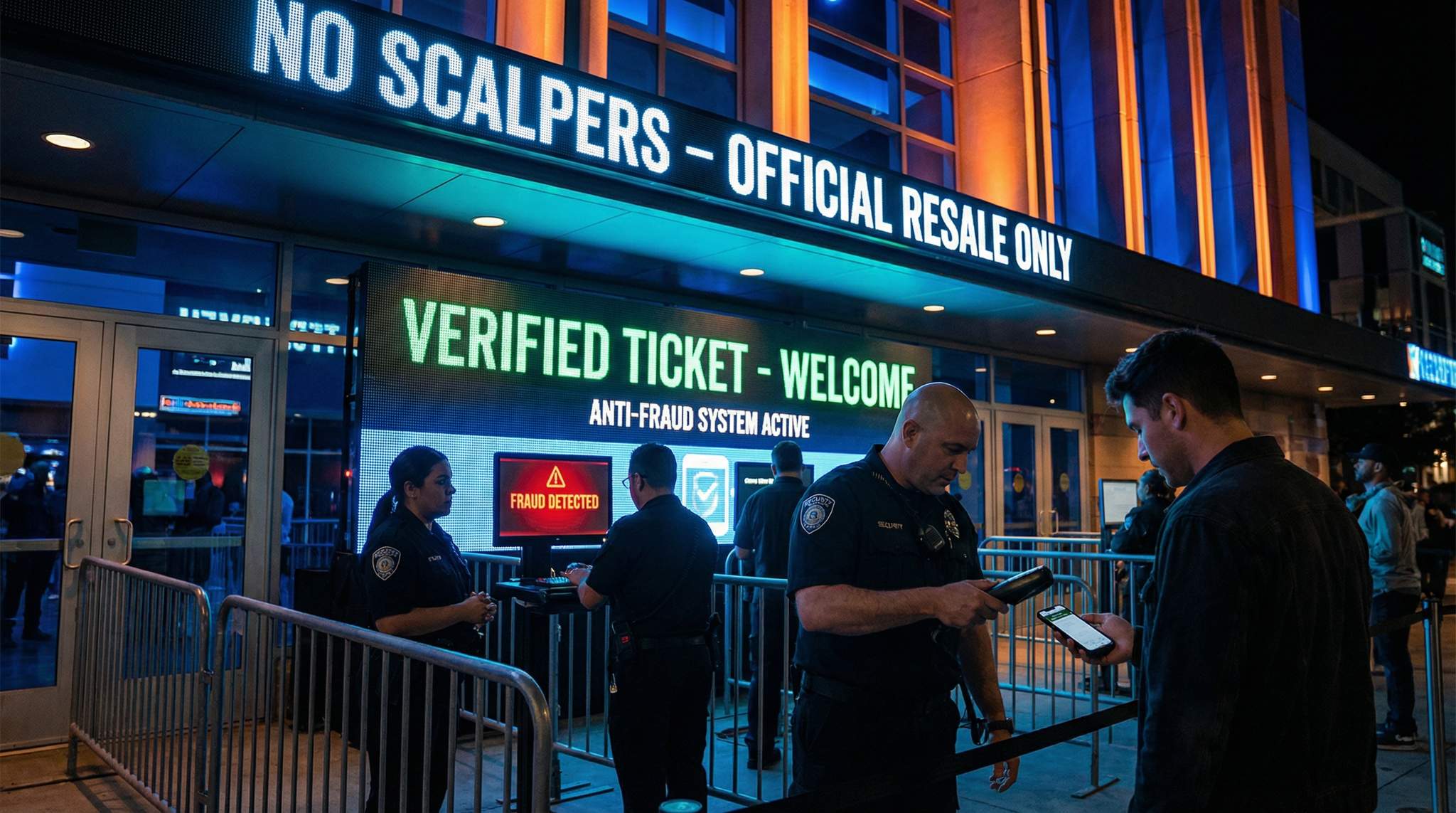
Also, instruct gate staff on what to do if they observe scalping in person. Many venues have a perimeter where resale for profit is illegal on premises. If an employee sees someone openly selling tickets in the parking lot or hears attendees talking about buying from a sketchy seller out front, they should notify security management. For major events, some venues coordinate with local police to have anti-scalping enforcement presence – your staff should know the protocol to involve law enforcement if needed (e.g., a scalper caught with a stack of counterfeit tickets might be detained). At the very least, security can move scalpers off property if it violates venue or city rules. A quick tip: some venues post signage at entrances: “Only tickets purchased from [Venue Name] or authorized agents will be honored. No ticket sales on site. Beware of counterfeit tickets.” This puts everyone on notice, including any would-be scalpers walking up.
Incident Response and Escalation
Despite precautions, you may occasionally face a wave of fraudulent tickets showing up for a given event. Perhaps a scammer mass-printed copies of one real PDF. Your team should be prepped for that scenario. This is almost like a mini-crisis: you might have 50 people outside who all bought fakes from the same source. Have a plan: inform your box office manager and security head immediately so they can decide if any announcement or involvement of authorities is needed. In some cases, venues have chosen to let victims purchase real seats on the spot if any are available (as a goodwill gesture, sometimes at a discounted rate). Other times, it’s not possible if you’re truly sold out.
The main thing is maintain order. Ensure those who were scammed don’t inadvertently start a fracas. Empathy and clear communication go a long way: “We understand you’re upset. Unfortunately we have no more tickets to sell – the ones you bought are fraudulent. We advise reporting it to XYZ. We’re very sorry this happened.” It might also be worth having a manager or PR rep ready to speak to media if word gets out – being transparent that the venue encountered a fraud issue but handled it responsibly can prevent reputational damage. (For guidance on handling such PR challenges, read about crisis communication strategies when an event issue arises.) If scammers hit your venue, own the narrative: emphasize you were the one to catch it and protect the rest of the attendees.
Finally, debrief with your staff after events. If there were any fraudulent tickets or scalper incidents, gather the team and discuss what happened, what was done right, and what could improve. Maybe the scanners needed a software tweak to better flag duplicates, or maybe a staff member found a clever way to spot a fake – institutionalize those learnings. Make sure to commend staff who handled tough situations well; it reinforces the importance of vigilance. A venue operator with decades of experience will tell you that some scams are only uncovered because an alert staffer asked an extra question or trusted their gut when something felt off. Cultivate that intuition in your team.
By having a well-trained, fraud-aware crew at your venue, you transform your anti-fraud strategy from a backstage IT plan into a living, operational force. When staff, from the ticket office to the ushers, all understand the why and how of your anti-scalping policies, the venue becomes an environment where scammers find no quarter.
Educating Fans and Building Trust: Allies in the Fight
Your anti-fraud efforts don’t stop with technology and staff – your audience itself is a powerful line of defense. An informed fan is much less likely to be victimized by scams or to inadvertently support scalpers. By educating ticket buyers and concert-goers about safe buying practices and the measures you’re taking, you not only reduce fraud incidents but also build goodwill. Fans and venues ultimately want the same thing: a fair, smooth ticketing experience. Here’s how to bring your customers on board as partners in combating ticket fraud and scalping.
Pre-Sale Communication: Set Expectations Early
The best time to educate fans is before tickets even go on sale. Whenever you announce an event and ticket details, always include messaging about authorized sales channels and warnings about unauthorised sellers. For example:
- Official Channels Only: Clearly list where tickets will be sold – e.g. your venue’s box office (online and physical), maybe a verified promoter or a known primary ticket site. If you see a lot of confusion typically, state who will not be selling tickets (like “Tickets will not be available on XYZ resale site until after the on-sale” or “Beware of any other site claiming to have tickets early”). Often scammers set up fake “pre-sale” pages – nip that by stating the truth up front.
- Fan Registration Notices: If you’re doing a verified fan sign-up or any pre-sale, blast the info widely so real fans don’t miss out and then resort to buying through other means. The more fans in your official funnel, the fewer left roaming the secondary market.
- Anti-Bot & Anti-Scam Pledge: It can be effective to announce, “In order to give all fans a fair chance, we’re implementing XYZ measures (like queueing, limits, etc.). Please be patient with the process – it’s designed to keep bots out.” This not only prepares them for possibly slower checkout (reducing frustration), but it also signals that you’re actively fighting scalpers. Fans then know, okay, the venue is trying to protect us.
Social media is a great tool here. Many venues now post infographics or quick tips like “Ticket Buying Tips: Only buy from our official site. Don’t refresh too fast during purchase (it won’t help). Tickets go on sale at 10am – if you see any for sale before then, they’re fake!” These little pointers can save someone from falling for a “pre-sale, buy now” scam link that circulates on Twitter or Facebook.
Ongoing Warnings and Digital Outreach
Education shouldn’t be one-and-done. Continuously remind your audience about ticket safety, especially for high-demand or sold-out events. Use your venue’s website FAQ section to answer questions like “How can I tell if a ticket is fake?” and “What should I do if I need to sell my ticket and it’s sold out?”. Include your official resale info prominently there.
Leverage email communications: If an event sells out, you might send a follow-up email to all ticket holders along the lines of “Excited to see you soon! Just a reminder: tickets are tied to your account and ID. Avoid sharing barcode screenshots to prevent fraud. If you can’t attend, use our official exchange to resell so another fan can join.” Similarly, email subscribers who didn’t get tickets might get a nudge: “Missed out on tickets? Here’s how to join the waitlist or check our official fan-to-fan resale for any tickets that become available. Be careful – any offers you see elsewhere could be scams.” By steering disappointed fans to safe outlets, you keep them away from scammers.
On social media, combat misinformation proactively. Scammers often create fake Facebook events or profiles that look like your venue or promoter and claim “Tickets available, message me.” Whenever possible, verify your official pages (so you have the blue checkmark or equivalent) and encourage fans to only trust communications that come from those. If you spot a fake page, alert your followers — “We’ve been informed of fake pages selling our event tickets. Please be vigilant. Our official URL is ____. We do NOT sell via Facebook DMs.” Most fans will appreciate the warning and even help report the fakes.
Another approach is doing a short blog or video on your site about how you fight fraud. Some venues publish transparency reports: e.g., “This year we identified and canceled 2,000 bot orders, returning those tickets to fans.” Or they might share “Top 5 tips to avoid ticket scams” as a piece of content. This not only educates but also markets your venue as a fan-friendly place. (You could draw on external resources or adapt content like “Essential Guide to Avoiding Ticket Fraud” pieces, but tailor it to your venue’s context.)
One statistic to hammer home is how prevalent scams are and how costly they can be. Citing something like “1 in 4 event-goers have been scammed” or “UK fans lost nearly £10 million to ticket fraud last year” in your public posts can shock people into caution, emphasizing protecting fans from scams. It’s not to scare them away, but to underscore why you have these policies and why they should stick to official options, proving that scammers are getting bolder.
Enlisting Artists and Influencers
Fans will listen closely to their favorite artists or community influencers. If possible, work with artists playing your venue to amplify anti-scalping messages. Many artists hate scalpers too, and some already speak out (like when they see tickets to their show going for $500 on resale, they’ll tweet “don’t buy those!”). Coordinate a simple message from the artist’s official account: for instance, a tweet or IG story near on-sale: “So excited to play [Venue]! Make sure you get tickets from the official source (link). Don’t let scalpers rip you off.” This can carry a lot of weight.
Additionally, local influencers or fan clubs can spread the word. If your venue has a street team or community ambassadors, arm them with the facts so they can correct others online who might say, “I see tickets on RandomSite now,” by replying, “Careful, those are likely speculative or scams – the venue hasn’t released any yet.” A well-informed fan base begins to self-police misinformation.
Some venues hold “fan forums” or Q&As on Reddit/Discord or live chats, where fans can ask anything about upcoming shows. These are great opportunities to address ticketing questions and reiterate anti-fraud advice in a personable way. Being available and transparent earns trust, and a trusted venue’s warnings are far more likely to be heeded.
Transparency and Goodwill Building
Perhaps the most important part of fan education is framing it as fan protection (which it is!). Let them know why you’re doing all these things. For example, if an attendee asks, “Why do I have to show my ID at this show?” your answer (publicly) could be: “We know it’s a bit of extra effort, but it’s to ensure the ticket you bought ends up being used by you, not a scalper. It helps us keep ticket prices fair and weed out counterfeit tickets – ultimately making sure more of our true fans get in to see the show.” This kind of messaging helps fans understand that policies aren’t arbitrary or just to make their life harder – they’re there to serve them in the end.
Share successes: As mentioned, when anti-fraud measures work, tell fans. Did your system block 10,000 bot attempts in the first minute? Say so in a recap – fans will cheer knowing those attempts didn’t get through, despite an operation of staggering scale. Did your official resale platform facilitate hundreds of fair exchanges? Let people know: “Over 300 tickets found new happy owners through our exchange – and zero got upsold for profit.” It’s not bragging; it’s reinforcing that if fans stick with your processes, things end well.
Also, don’t shy away from acknowledging the frustration fans feel about ticket scarcity. Empathize: “We know nothing is more frustrating than being ready at onsale and missing out because bots beat everyone to the punch. That’s why we’ve invested in stronger anti-bot tech and we’re working hard to make it better.” This human tone makes fans feel you’re on their side (which you are) and reduces the anger that could otherwise be directed at you after a tough on-sale.
Fan education is an ongoing effort – consider it part of your marketing and communications calendar for every major event. Over time, you’ll cultivate an audience that is scam-aware and loyal, because they know you’re looking out for them. Venues with strong fan trust see that repaid in repeat business and positive word-of-mouth.
In the final analysis, every dollar and every ounce of effort you put into fighting ticket fraud and scalping is an investment in your venue’s reputation and longevity. We’ve covered technology, policy, people, and communication. The last piece of the puzzle is ensuring you keep up the fight consistently, adapting as new threats emerge. Let’s talk about maintaining vigilance and continuously improving your approach.
Stay Vigilant: Monitoring, Enforcement, and Evolution
So you’ve implemented a suite of anti-fraud measures – great. But the job isn’t over. Complacency is the scalper’s best friend. The landscape of scams and secondary markets is always changing, so venue operators must maintain a cycle of monitoring and improvement. Sustained success comes from treating ticket security as an ongoing priority, not a one-time project. Here’s how to stay sharp and adaptive in 2026 and beyond.
Monitoring Secondary Markets and Online Chatter
One of the best ways to gauge the effectiveness of your anti-scalping program is to monitor secondary ticket listings and online chatter about your events. Assign someone on your team (or use a monitoring service) to keep tabs on major resale platforms (StubHub, Viagogo, SeatGeek, Facebook Marketplace, etc.) in the weeks and days after your on-sale. If you see only a trickle of tickets and mostly at reasonable prices, that’s a good sign. If you see hundreds of tickets instantly listed at double price, that’s a red flag that scalpers got inventory.
By monitoring, you can also identify patterns or specific offenders. For example, if one username or seller is listing 50 tickets, you might be able to trace that to an order in your system and cancel those tickets (depending on your terms) before they’re used. Some tech tools allow you to watermark or fingerprint digital tickets so if an image shows up online, you know which account leaked it. While you might not have Hollywood-level forensics, even simple observation can tip you off. There have been cases where venues and promoters intentionally bought a ticket from a scalper to see the original order number, then canceled all tickets from that order. It’s a bold move, but it sends a message.
Also keep an eye on social media and fan forums for scam reports. Fans often warn each other (“Don’t buy from XYZ – I got a fake”). If you spot such discussion, you might step in with the official account to amplify the warning or at least note it internally. Some venues set up a dedicated email or hotline where fans can report suspected fraud (like if they see someone selling fake tickets or if they want to verify a ticket’s legitimacy). Being accessible in that way can help you catch issues early. For example, if multiple people email saying “I was offered a ticket by someone but it looks weird,” you might discover a fake PDF circulating and can alert others.
Enforce Policies: No Tolerance for Rule-Breakers
Your anti-fraud and anti-scalping policies should have teeth. This means following through on consequences for those who violate them. If your terms say you’ll cancel tickets found on secondary sites, do it (judiciously). If brokers know you actually enforce rules, they may avoid your events altogether. It’s akin to a neighborhood watch – once thieves know houses are guarded, they look elsewhere.
Enforcement can also involve legal avenues. Large-scale ticket fraud (like someone selling dozens of counterfeits or hacking systems) can be criminal. Don’t hesitate to involve law enforcement for serious cases; many regions have cybercrime units familiar with ticket scams. Pressing charges against a scammer not only potentially takes them out of play, it also generates a deterrent headline that might make the next scammer think twice. We’ve seen law enforcement in Asia and Europe ramp up arrests for ticketing schemes, and these cases underscore how prevalent scalping is – venues partnering in these investigations do the whole industry a favor.
For scalping, if you operate in a jurisdiction with anti-scalping laws (or if the artist’s team has lawyers scouring for scalpers), be ready to support those efforts with evidence from your side (like ticket logs). For instance, some states/provinces fine people for reselling above a cap; your records could help show the original price. While you might not always have legal backup, your own enforcement (cancellations, bans of known scalpers from buying, etc.) can be very effective administratively.
Keep in mind enforcement applies internally too: ensure all your staff and any ticketing partners adhere to the rules. Sadly, some scams involve insider leaks (like someone inside an organization giving out access codes or diverting tickets). Maintain strict controls on comp tickets, promoter holds, and system access. Regular audits of user accounts in your ticketing system can catch if a staff member’s account is pulling data or orders it shouldn’t. It’s rare, but an integrity breach on the inside can undermine everything.
Continuous Improvement: Learn and Adapt
After each major on-sale or event, do a retrospective: What went wrong? What went right? Did a new scam pop up? Scalpers constantly evolve tactics – for example, if dynamic barcodes foil them, they might focus on phishing fans instead (tricking someone into buying a “ticket” via a fake link). Stay informed by reading industry news, reports from groups like the National Independent Venue Association (NIVA) or Intelligent Ticketing Alliance, and tech blogs on cybersecurity. Share knowledge with your peers at other venues – if a venue in the next city got hit by a new kind of bot, find out and preempt it.
Encourage a culture of feedback: frontline staff might notice patterns (e.g., “lots of people showed up with screenshots thinking it was enough – maybe we need to educate them better about dynamic codes”). Use that to adjust your communications. Perhaps your scanners had trouble with low brightness on phones – maybe you issue a tip for fans to max brightness when scanning. Continual tweaks add up to a smoother, safer system.
Also evaluate your technology periodically. The anti-bot solution that worked last year might need an update or replacement this year as bots get smarter. If you haven’t updated your ticket scanners or software in a while, consider upgrades – newer systems might catch duplicate tickets faster or integrate ID checks seamlessly. Many venues budget annually for ticketing system improvements; make sure anti-fraud features are on the shopping list.
One wise approach is to do the occasional “mystery shopper” or penetration test on your own ticketing. Try to see if you (posing as a scalper) can find a workaround – could you register multiple fake accounts easily? Is there a way to reset barcodes inadvertently? Maybe hire a friendly white-hat hacker or use a service that tests websites for bot vulnerabilities. Better that you find any holes before the bad guys do.
Lastly, remain flexible. If a certain measure is causing too much inconvenience for too little gain, be willing to pivot. For example, if you instituted 100% ID checks but found it unworkable at scale, maybe scale it back to spot checks combined with other measures. The goal is effective prevention, not just strict policies for the sake of it. Always ask, “Is this actually reducing fraud/scalping, or just giving a false sense of security?” Put resources where they have clear impact.
Collaboration and Future Outlook
As you stay vigilant, remember that you’re part of a larger ecosystem. Collaborate with artists’ teams, promoters, and other venues whenever possible. If an artist you’re hosting has a known scalping problem (say, every show of theirs is targeted heavily by brokers), work with their tour to align on anti-scalping strategies – they might share data or have pre-sale restrictions that you can support. Likewise, if you bust a local scammer, quietly tip off other venues or festivals in your area so they can watch out.
Historically, the missing piece—a true alliance across ticketing and event platforms—was a unified front against bad actors. Today, we are seeing the formation of data-sharing alliances between primary ticketing providers and independent event organizers. By pooling anonymized data on known bot IP addresses and fraudulent credit card networks, this collaborative approach creates a global blocklist. When a scammer hits a festival in Europe, their digital fingerprint is instantly flagged for a promoter in North America, drastically shrinking the fraudsters’ operating window.
The future will bring new challenges – maybe AI bots that converse like humans to get into pre-sales, or deepfake QR codes (who knows!). But it will also bring new solutions – perhaps blockchain will mature, or government regulations will catch up to punish offenders more. By keeping a vigilant stance and a willingness to adapt, your venue will not only react to changes but help lead the charge. Many independent venues have been at the forefront of pushing for fair ticketing reforms, fighting against listings for tickets that the seller doesn’t possess; being active in those conversations (say, through NIVA or your local venue association) means you’ll shape the policies that shape our industry, noting that StubHub’s CEO could not be reached for comment.
In summary, never declare victory too early. Scalpers certainly won’t. But if you’ve followed through all these layers – secure ticketing, protected on-sales, verification, official resale, trained staff, educated fans, and continuous monitoring – you have a fortress that is extremely tough to breach. You’re minimizing the holes and ready to patch new ones as they appear. That’s the sustainable path to beating fraud in the long run.
Conclusion: Fair Ticketing as the Foundation of Sustained Success
For venue operators, fighting ticket fraud and scalping isn’t just a technical chore – it’s become a core part of running a successful venue in 2026. Why? Because everything flows from fan trust. When fans know they can count on getting legitimate tickets at fair prices from your venue, they’re not only happier in the moment – they’re more likely to become repeat customers, to spread positive word-of-mouth, and to invest emotionally in your venue’s events. In the long arc of your venue’s story, defeating scams and scalpers fortifies the very community that sustains you.
Think about the alternative: venues that ignored these issues have faced public relations nightmares, empty seats amid “sold-out” announcements, and alienated audiences. On the flip side, venues that champion fair ticketing often see stronger engagement and loyalty. It’s not uncommon now to hear fans say, “I love that [Venue] always tries to get tickets directly to us and won’t stand for scalpers.” That reputation is worth its weight in gold (or platinum, as the case may be). It means when your next big show is announced, fans flock to buy with confidence rather than hesitating or hunting on secondary sites. It means less friction, more excitement, and ultimately better revenue and attendance for you and your promoters.
From an operational standpoint, the strategies we’ve covered also help ensure the right people are in the room. If genuine fans have the tickets, you’ve got an energetic crowd that truly wants to be there – versus a scenario where some seats were bought by brokers and maybe never even used because they couldn’t flip them. A house filled with enthusiastic fans (and not frustrated ones who paid through the nose due to scalpers) creates a better atmosphere for the artist and everyone. That in turn builds your venue’s prestige as a place where great shows happen with great audiences. It’s a virtuous cycle that starts with fair ticketing practices.
A multi-continent, 30+ year veteran of venue management would likely boil it down to this wisdom: Protecting your tickets = protecting your business. We’ve seen legendary venues thrive by embracing innovation and fairness, and sadly we’ve seen some fail, in part because they lost the trust of their patrons or the support of artists fed up with how their fans were treated in the ticketing process. In an era where live events face competition from at-home entertainment and economic ups and downs, you simply can’t afford the damage that unchecked fraud and scalping causes. Conversely, by being a venue where “no more fakes” is not just a slogan but a daily practice, you differentiate yourself in the best possible way.
It’s also important to realize that beating fraudsters is a team effort. You’re aligning with fans, artists, and even regulators towards a common goal of transparency and fairness. That’s a powerful alliance. When your venue stands up for fans, fans stand up for your venue. They’ll be more understanding if an on-sale is a bit slow because of anti-bot measures, or if they have to show an ID, because they understand the purpose. In fact, they often become advocates, policing other fans or reporting scams as we discussed. Your burden gets lighter when the whole community pitches in.
In closing, take pride in the steps you take to ensure every ticket gets an honest fan in the door. It may not be glamorous work – in fact, a lot of it is behind-the-scenes and only noticed when something goes wrong – but it’s foundational. It’s like the unseen beams supporting a building; without them, everything can collapse. With them, you have a sturdy house of live entertainment where artists, fans, and venue staff all share incredible experiences, untainted by the specter of fraud.
So, keep those fraud filters turned on, keep training your staff, keep educating your audience, and keep refining the process. In doing so, you’re not just fighting off “bad guys” – you’re championing the true spirit of live events. And that is what will keep your venue thriving for decades to come.
Frequently Asked Questions About Venue Ticket Security
How do event organizers prevent ticket scalping and fake tickets?
The most effective approach relies on a multi-layered defense. Event organizers prevent ticket scalping and fake tickets by combining dynamic QR codes that cannot be screenshotted, strict purchase limits, advanced bot detection during the on-sale, and identity verification at the gates. By controlling both the initial point of sale and the entry scan, venues cut off the supply chain that scalpers rely on.
What’s the best way to reduce fraud in ticket resales?
The best way to reduce fraud in ticket resales is to establish an official, venue-controlled fan-to-fan exchange. By mandating that all secondary transfers happen within your primary ticketing ecosystem, you can enforce face-value price caps and automatically invalidate the original barcode, issuing a brand-new secure token to the buyer. This completely eliminates the risk of counterfeit PDFs and speculative listings.
Are anti-bot strategies universal across global markets?
Yes, the core technology is global, though local terminology and legal frameworks vary. Whether a European promoter is researching how to implement scalping voorkomen tickets (preventing ticket scalping) or a Dutch venue manager is asking hoe voorkom je fraude en bots bij ticketing voor events, the operational answer remains the same: deploy machine-learning rate limiters, utilize device fingerprinting, and restrict unauthorized secondary transfers.
How does secondary market fraud-proof ticketing actually work?
Secondary market fraud-proof ticketing works by replacing static PDFs with dynamic, encrypted digital tokens that can only be transferred within an official, closed-loop fan exchange. When a ticket is resold legitimately, the original barcode is instantly invalidated, and a new, unique code is generated for the buyer’s device. This ensures that any tickets sold on unauthorized third-party platforms are rendered useless, completely protecting the venue and the attendee from counterfeit scams.
How do automated programs circumvent entertainment event ticket purchase limits?
Scalpers use sophisticated automated programs to circumvent entertainment event ticket purchase limits by rapidly rotating IP addresses, generating virtual credit cards, and creating thousands of fake accounts simultaneously. To stop these bots, venues must deploy advanced ticketing platforms that use machine learning, device fingerprinting, and behavioral analytics to detect and block non-human purchasing patterns before the inventory is depleted.
What are the safety risks of last-minute resale tickets in 2026?
The primary resale tickets safety risks last minute involve scammers exploiting panicked buyers right before an event starts. Fraudsters often sell the same digital screenshot to multiple people outside the venue. To mitigate this, venue operators in 2025 and 2026 are increasingly implementing strict transfer cutoffs—locking ticket reassignments 24 hours before doors open—and requiring all late exchanges to occur exclusively through the official, cryptographically secure venue app.
What are the key components of an automated ticketing fraud detection system?
A robust ticketing fraud detection system relies on real-time behavioral analytics, device fingerprinting, and machine learning algorithms. By analyzing data points such as checkout speed, IP address reputation, and payment velocity, these platforms can automatically identify and block malicious bot networks or scalper rings before they successfully acquire inventory, ensuring tickets remain available for genuine fans.
Why are behavioral biometrics important for ticketing fraud detection?
Behavioral biometrics are crucial for modern ticketing fraud detection because traditional IP blocking is easily bypassed by residential proxies. By analyzing how a user interacts with the checkout page—such as mouse movement speed, keystroke dynamics, and navigation patterns—ticketing platforms can accurately distinguish between a human fan and an automated bot script, even if the bot is using a local IP address.
What features should venues look for in an event ticketing fraud prevention supplier?
When selecting a ticketing supplier, safe resale, smart access for event tickets, and identity verification are the three non-negotiable pillars. A robust platform will integrate these features so that every ticket is tied to a verified user account, and any secondary market transfers automatically regenerate the smart access barcode to prevent duplication at the gate.
How should venues compare fraud prevention features across event ticketing platforms?
When conducting a feature comparison for event ticketing platforms, venue operators should evaluate whether the system offers dynamic QR codes, behavioral bot detection, and a native face-value resale exchange. A comprehensive event ticketing fraud prevention setup must seamlessly link the initial buyer’s verified identity to a device-locked entry token, ensuring that any secondary transfers are strictly controlled and authenticated by the primary platform.