

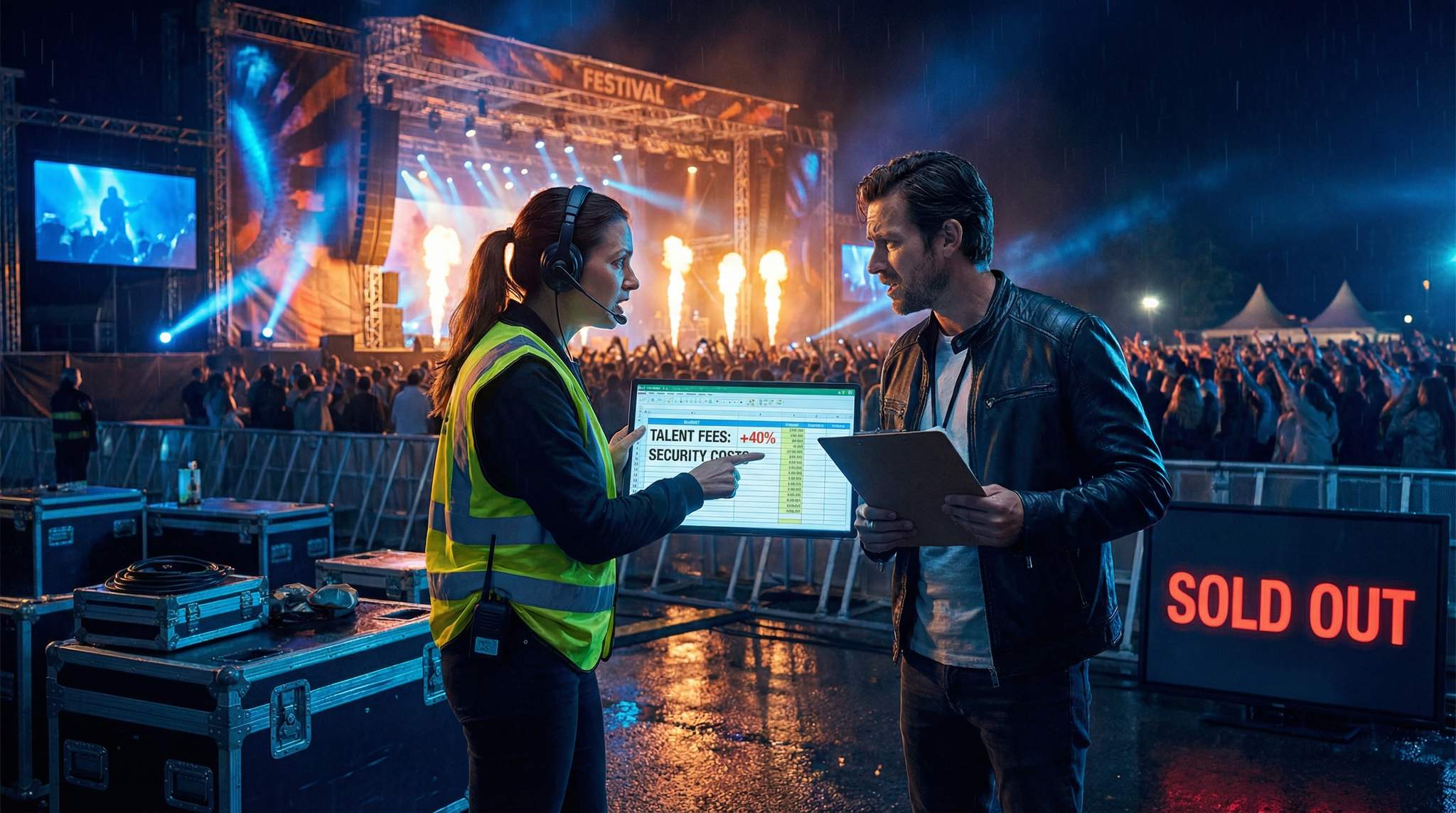
A comprehensive guide to overcoming new challenges and ensuring your festival business thrives.
Introduction
The global festival scene is roaring back in 2025, with record crowds flocking to live events after years of pent-up demand. In the first half of 2024 alone, an estimated 151 million people attended concerts and festivals worldwide – about a 4% increase over the previous year, according to the Global Live Events and Festivals Report 2024. Major festivals have scaled up dramatically (Glastonbury 2023 reportedly cost £62 million – around $72M – to stage), reflecting how high the stakes have become. As noted in analysis on what 90% of festivals get wrong about budgeting, financial discipline is vital at all levels. Yet behind the glittering stages and sold-out crowds, organizers face formidable pain points that can threaten the profitability and long-term sustainability of their events. From skyrocketing costs and fierce competition to unpredictable weather and regulatory hurdles, running a festival is a high-risk endeavor.
In this updated guide, we’ll delve into the key challenges festival organizers face and provide actionable insights drawn from industry experience and expert data. You’ll learn how to balance your budget amid rising expenses, build a loyal audience in a saturated market, prepare for weather and safety risks, and navigate the legal maze of permits and compliance. By tackling these pain points head-on, you can set your festival business up for enduring success and ensure the success of your festival business by understanding current attendance trends. Let’s explore each challenge and how to overcome it in today’s evolving festival landscape.
1. Balancing the Budget: Financial Challenges of Festival Organization
For most festival organizers, the number one challenge is managing finances effectively. Even as ticket demand rebounds, costs have risen across the board – and profit margins are razor-thin. Organizing a festival involves countless expenses, including but not limited to:
- Talent booking fees: Landing popular artists, DJs, or speakers often means paying top dollar. Headliner fees have soared 30–40% since 2020, a trend highlighted in reports on how music festivals in France face fragile economics, fueling intense “talent wars” among festivals competing for big names. Mega-stars can charge fees in the millions, which can easily consume a huge slice of your budget (often 30–50% of total costs for music festivals). To avoid common budgeting and finance mistakes, seasoned promoters know to balance marquee talent with affordable rising acts to control this expense. For deeper insight, read about festival budgets spiraling out of activity due to soaring artist fees.
- Marketing and advertising costs: To attract attendees, you must invest in ads, promoters, and content across channels – from targeted digital campaigns to billboards and radio. Even organic efforts like social media require time and resources. Many organizers implement a robust strategy backed by global music festival attendance statistics to optimize their organic social media campaigns. Marketing typically accounts for 5–15% of a festival budget, and understanding where festivals go wrong with budgeting is crucial as these costs rise with increased competition.
- Venue rental and site infrastructure: Whether it’s a city park or a remote field, venue costs can be significant. Rental fees, permits for the site, power generators, fencing, and sanitation all add up. A large venue lease plus extensive on-site setup can run in the millions for major events, while even smaller festivals might budget 10%+ for venue and infrastructure needs. Choosing the right venue can save money and headaches, as highlighted in guides on mastering venue and site planning.
- Security, staffing and operations: Ensuring attendee safety and smooth operations requires hiring security personnel, event staff, medics, and often paying overtime or hazard pay. Post-pandemic labor shortages mean higher wages for experienced crew. Operations (staff, security, logistics) commonly take 10–15% of the budget. Some 2025 festivals are adopting automation (like cashless systems or RFID entry) to fill labor gaps and cut costs without compromising service.
- Licensing, permits and insurance: Festivals must secure various licenses (e.g. liquor, food service, music rights) and permits (noise ordinances, use of public land, building safety). These come with fees and often require insurance coverage. In addition, insurance premiums for events have skyrocketed recently – liability, weather, and cancellation insurance are all more expensive and harder to obtain. This trend is threatening their sustainability despite strong attendance, forcing organizers to allocate larger portions of the budget for compliance.
- Production equipment and infrastructure: Stages, tents, lighting and sound systems, video screens, pyrotechnics – the technical production costs can be enormous for a high-end festival. This category, along with general site infrastructure like fencing, toilets, and generators, can account for 20–30% of total costs. Smart producers look for cost-saving tactics in production like bulk deals or multi-year contracts with vendors to manage these expenses.
To maintain profitability, you must carefully balance all these costs with revenue streams like ticket sales, sponsorship, merchandise, and concessions. It’s not easy – according to WifiTalents’ festival attendance statistics, maximizing per-head revenue is critical. A recent study in France revealed that two-thirds of music festivals ran a deficit in 2024 despite healthy attendance, largely due to fragile economics and unsustainable futures. Skyrocketing artist fees, inflation in logistics and labor, and weather-related losses all contributed. In other words, selling out your festival doesn’t guarantee profit if your budget isn’t controlled. Here are some strategies for overcoming budget challenges:
- Negotiate relentlessly with suppliers and talent: Build relationships with vendors and seek volume discounts or bundled deals (e.g. getting staging, lighting and AV from one provider for a package rate). When booking talent, negotiate fair fees and consider incentives like profit-sharing or future bookings rather than paying full cash up front. In today’s climate, many artists understand festivals are struggling; some accept slightly lower guarantees in exchange for billing or other perks (especially if you can offer a unique experience or loyal audience). Coordinating with other festivals – for instance, booking an artist as part of a regional tour routing – can also reduce costs by sharing travel expenses.
- Monitor and control expenses in real time: Create a detailed budget and keep track of finances on the day of the event – not just after. Update your budget whenever you sign a new contract or encounter an unexpected cost. By tracking every expense against the budget, you can spot early if you’re going off course. Use accounting software or at least a dedicated spreadsheet to log all expenditures; this helps avoid nasty surprises. Industry analysis suggests nearly 90% of events overspend their initial budget by 15–30%, so managing costs diligently from the start is essential. If you see one area (say, production) creeping over-budget, be prepared to trim costs elsewhere or find extra revenue to cover it.
- Pursue diverse partnerships and sponsorships: Don’t rely solely on ticket revenue. Proactively seek sponsors or brand partners that align with your festival’s vibe and audience. A well-structured festival sponsorship strategy can offset major expenses by contributing cash, equipment, or services in-kind. For example, a beverage sponsor might supply free drinks (saving you cost) plus pay a fee to reach your attendees. Offer sponsors creative packages – stage naming rights, VIP lounge branding, or experiential activations on-site – that deliver them value. Many festivals also partner with local tourism boards or cultural grants for additional funding. The key is to craft partnerships that enhance the attendee experience while bringing in money or resources.
- Grow ancillary revenue streams: Increase the money coming in to balance high costs. Savvy festivals boost per-attendee spending through offerings like premium VIP upgrades, parking fees, camping passes, and artist merchandise booths. According to key statistics on festival attendance, optimizing these secondary revenue channels is vital. A well-run merch program or food vendor revenue-share can meaningfully pad your bottom line. Explore year-round revenue as well (selling festival-branded merchandise online or off-season mini-events). Every extra dollar of income gives you more breathing room on the budget.
Pro Tip: Always set aside at least 10–15% of your total budget as a contingency fund. This built-in safety net will cover surprise expenses – whether a sudden equipment repair, a supplier cost overrun, or an opportunity to enhance the show last-minute – without derailing your entire budget. Treat this contingency like it’s untouchable until truly needed.
Warning: Don’t base your budget on a perfect world scenario. It’s a common rookie mistake to assume a 100% sell-out at full ticket price or to overestimate sponsorships. Overly optimistic revenue projections can lead to spending money you won’t actually earn back if sales fall short. Plan for a reasonable (even slightly conservative) attendance and have backup plans to cut costs if needed – that way you won’t face a financial crisis if reality doesn’t meet your best-case scenario.
One useful way to plan is by looking at how a typical festival budget breaks down. Here’s an illustrative comparison of a small festival vs. a large festival budget:
| Expense Category | Local Festival (~$200k total budget) | Major Festival (~$25M total budget) |
|---|---|---|
| Talent (artists, etc.) | $50,000 (25%) – local acts + one headliner | $10,000,000 (40%) – multiple big-name headliners |
| Production (stage, AV) | $60,000 (30%) – basic stage, sound, lighting | $7,500,000 (30%) – massive stages, top-tier AV |
| Venue & Infrastructure | $20,000 (10%) – venue hire, fencing, basic facilities | $2,000,000 (8%) – large site lease, extensive setup |
| Operations (staff, etc.) | $30,000 (15%) – volunteer crew, minimal security | $3,000,000 (12%) – full pro staff, security, medical |
| Marketing & Promotion | $20,000 (10%) – local ads, social media outreach | $1,500,000 (6%) – multi-city ad campaign, influencers |
| Contingency & Misc | $20,000 (10%) – emergency fund, misc. fees | $1,000,000 (4%) – contingency, insurance, misc. |
Table: Approximate budget breakdown for a small vs. large festival. Note how larger events tend to spend a greater share on talent, while economies of scale can reduce the percentage spent on marketing and contingency funds.
Every festival’s situation is unique, but the core principle is universal: keep a tight grip on your budget. By negotiating costs, tracking spending diligently, maximizing income streams, and preserving a healthy cushion, you give your festival the best chance to keep your sales on track for success and stay profitable. In turbulent economic times, financial discipline and creativity will make the difference between a festival that thrives and one that fades away.
2. Attracting a Loyal Audience: The Importance of Marketing and Branding
Another major challenge for festival organizers is attracting a large and loyal audience in an increasingly crowded market. With hundreds of festivals vying for fans’ attention each year, competition is fierce. To differentiate your event, focus on smart marketing and a standout brand that resonates with your target attendees:
- Build a strong, consistent brand identity: Develop a memorable festival name, logo, and visual style that immediately convey your event’s vibe. Whether it’s an underground techno rave or a family-friendly food festival, your branding should reflect that personality. Use it consistently across all materials – website, tickets, merch, social media – so that fans instantly recognize you. Over time, a strong brand creates an emotional connection; for example, Tomorrowland’s dreamy fantasy theme or Burning Man’s counterculture ethos are so distinct that they’ve cultivated incredibly loyal communities. Even smaller events can build a cult brand by having a clear identity and theme that drives promotion and production.
- Craft a unique selling proposition (USP): Identify what makes your festival truly unique and highlight that everywhere. Maybe your location is extraordinary (a castle, an island, a desert), or you focus on a niche genre or cultural theme no one else offers. Lean into that differentiator. Your USP should answer the question for potential attendees: “Why choose this festival over the others?” For instance, one festival might emphasize an eco-friendly zero-waste experience, while another boasts an exclusive one-weekend reunion of legendary bands. A compelling USP woven into your storytelling and marketing gives people a reason to choose your event and helps drive your promotion.
- Use targeted marketing campaigns to reach the right audience: Don’t waste budget casting a wide net indiscriminately. Leverage data to find your ideal audience and speak directly to them. Use demographic insights and fan data (age, location, music preferences) to tailor your ads and content. Platforms like Facebook, Instagram, and TikTok allow fine targeting – e.g. showing ads only to fans of similar artists or people who attend events in your region. Analyze what types of posts or ads convert best. As our guide on using audience demographics for effective campaigns explains, data-driven marketing helps ensure your message hits those most likely to buy tickets. For example, if your festival is indie folk music, you might target folk club members, guitar hobby communities, and college towns known for indie scenes. The more precisely you target, the higher your ROI on each marketing dollar.
- Leverage social media and influencer partnerships: In 2025, social media buzz is indispensable for selling tickets. Engage audiences on platforms your target demo uses – that could be Instagram and TikTok for a younger crowd, or Facebook groups and Reddit threads for niche communities. Post consistently and interact authentically with fans (answer questions, share behind-the-scenes updates). Many top promoters kickstart hype by revealing line-ups or surprises on social channels first to reward followers. Additionally, partner with influencers or content creators who align with your festival’s genre and vibe. Invite them to preview the event or do giveaways. An Instagram DJ with 100k followers posting about your festival can massively extend your reach. Just ensure any influencer promotion feels genuine and not overly scripted. And don’t forget user-generated content: encourage attendees to share their own photos and experiences from your festival – word-of-mouth from peers is incredibly powerful.
- Produce engaging content that creates FOMO: Give people a taste of the experience they’ll get. High-quality teaser videos, artist interview clips, or photo galleries of past festivals can all spark excitement. In the digital age, content is marketing – so deploy everything from short-form videos on TikTok to longer YouTube aftermovies. Showcase not just your lineup but the overall atmosphere, crowd energy, art installations, food, and unique moments. A well-crafted aftermovie or a viral 30-second stage clip can significantly boost ticket sales as fans share it widely. For example, festivals have seen success making online content to attract ticket buyers – such as backstage livestreams, trivia contests, or AR filters that let users “wear” your festival’s theme. Be creative and strategic: each piece of content should either build your brand story or drive urgency to attend (“don’t miss out!”).
Pro Tip: Cultivate a community, not just an audience. The most successful festivals turn their attendees into passionate advocates. Engage with your community year-round: create online forums or Facebook groups for fans, host smaller meetups or DJ live streams in the off-season, and give loyal attendees early access to tickets or exclusive merch. By making fans feel like they’re part of a family, you’ll foster repeat attendance and priceless word-of-mouth marketing. Some veteran festival marketers even set up ambassador programs – recruiting super-fans to promote the event in exchange for perks. An invested community will stick with you through ups and downs and bring their friends along.
Marketing a festival effectively requires a blend of creativity, data analysis, and genuine experience design. Remember that every touchpoint is part of your marketing – from how your ticketing page is designed, to the tone of your email updates, to on-site signage. By building a compelling brand, targeting your outreach, and stoking engagement through content and influencers, you can cut through the noise and attract the right attendees. Over time, those one-time attendees can turn into a loyal audience that returns year after year, providing a stable foundation for your festival’s sustainability.
3. Weathering the Storm: Managing Unpredictable Weather Conditions
Outdoor festivals are at the mercy of Mother Nature, and unpredictable weather can make or break an event. In recent years, extreme weather has become more common – from unseasonal downpours to heatwaves and wildfires – so festival organizers must be proactive in mitigating weather-related risks. A single storm can pose safety hazards, drive up costs, or even force a cancellation, so planning for bad weather is as important as hoping for good weather. Here’s how to weather-proof your festival as much as possible:
- Choose the right season and location: Start with smart scheduling. Research historical weather patterns for your intended dates and location. Aim for a time of year with a lower likelihood of extreme events (no guarantees, but some months are statistically drier or cooler). Likewise, consider the site: Is it prone to flooding or high winds? Does it have shade if it’s a summer event? Festivals in open fields might face different risks than those in urban parks. Some organizers now conduct climate risk assessments when choosing sites. For instance, a site on higher ground with good drainage and multiple shelter options will be safer in a rainstorm than a flat exposed field. Festival venue planning can incorporate resilience measures – think installing drainage ditches, using wind-resistant stage structures, or situating stages away from large trees that could fall. By selecting venues with climate resilience in mind, you reduce the chance that weather will derail your event.
- Invest in weather monitoring and insurance: Stay ahead of the forecast. In the days leading up to and during your festival, have a system for real-time weather monitoring. Large festivals often hire a dedicated meteorologist or subscribe to hyper-local weather alert services that can warn of incoming lightning, high winds, or storms hours or minutes in advance. Getting alerts even 20 minutes sooner can be the difference in evacuating a field safely or avoiding equipment damage. In addition, consider purchasing weather insurance (also called event cancellation insurance). This policy can help protect your financial interests if you have to cancel or shut down due to extreme weather – it won’t save the event, but it can save your company from bankruptcy. Be aware, however, that such insurance has become more expensive with the rise in claims; recent years have seen rising premiums and limited coverage for festival insurance. Always read the fine print on what conditions are covered. Some festivals on tight budgets forego this insurance, effectively “self-insuring” by building a cash reserve for emergencies instead. Weigh the cost versus risk: a beachfront festival during hurricane season probably shouldn’t skip weather insurance, whereas a small indoor winter event might not need it.
- Create a robust weather contingency plan: Hope for sunshine, plan for storms. Long before your event, develop a detailed contingency plan for various weather scenarios. This should include specific action steps for each type of threat – e.g., in case of lightning, shut down stages and evacuate main field to sheltered areas; in case of high winds, pause performances and secure loose equipment; in case of extreme heat, open free water stations, announce reminders to hydrate, and have misting areas. Define who on your team makes the call to delay or cancel, and how that decision will be communicated to staff, vendors, and attendees. Identify backup options: can you move any activities to an indoor space or tents? Do you have ponchos or emergency blankets to distribute? If one day of a multi-day festival is washed out, can you reschedule performances to another stage or day? Also plan the communication strategy – use your festival app, social media, and on-site announcements to instantly update attendees if schedules or safety procedures change. This is critical for managing risks that are threatening their sustainability and excluding audiences facing reduced purchasing power if events are cancelled without refunds. The public will be far more understanding of delays or changes if they feel informed and safe. Document all these plans in your event manual and make sure every key staff member knows them.
Pro Tip: Have a weather guru on call. Consider hiring a professional meteorologist or subscribing to an event weather service during your festival. Early warnings of approaching lightning or dangerous winds can allow you to pause the show and get people to safety before a crisis hits. Also, stock some basic weather supplies: keep rubber mats for muddy areas, sandbags for securing tent legs, and extra tents or indoor space available for emergency shelter. A little preparedness can turn a potential disaster into a minor hiccup.
Despite all precautions, sometimes nature wins – and many festivals have learned hard lessons here. In 2023, for example, an unexpected desert rainstorm turned Burning Man’s campsite into a mud pit, stranding thousands for days. Some European events have faced heat waves requiring mass distribution of water and shade. By learning from these incidents, festival producers now know to expect the unexpected. Your best defense is good planning and flexibility. If you can’t eliminate weather risk, you can certainly mitigate it with smart choices and a solid Plan B (and C). Attendees will remember how you handled the situation as much as the weather itself. Showing calm, coordinated management in a storm can actually build trust and loyalty with your audience.
4. Ensuring Safety and Security: Protecting Attendees and Staff
Nothing is more important than the safety and security of everyone at your festival. With large crowds, loud music, and high emotions, festivals present unique safety challenges – and any incident can have tragic consequences for fans and ruin your event’s reputation. In an era where news of safety failures spreads instantly on social media, organizers must go above and beyond to keep attendees and staff safe. Building a rock-solid safety plan is not optional; it’s the foundation of a successful, trusted festival. Key aspects of festival safety include:
- Professional security and crowd management: Hire an experienced security team that specializes in live events or festivals. Brief them thoroughly on the event layout, crowd flow plan, and any sensitive areas (artist zones, cash offices, etc.). They should be well-trained in crowd control, conflict de-escalation, and emergency response. In 2021, the Astroworld festival tragedy in Texas – where a crowd surge led to multiple fatalities – was a grim reminder of how the crowd surge could have been prevented. Learn from such incidents: ensure you have enough security personnel relative to your crowd size, and that they know how to spot warning signs of dangerous crowd density or distress. Veteran festival directors often employ independent crowd safety consultants to design entrance routes, mosh pit barriers, and emergency egress paths informed by mathematical models of crowd behavior. The goal is to prevent bottlenecks and give attendees ample space to move safely. Don’t skimp on security staffing; it’s far cheaper than dealing with a lawsuit or a life lost.
- Emergency response planning and medical services: Well before gates open, coordinate with local emergency services (police, fire department, ambulance providers) and create a unified emergency action plan. This plan should cover scenarios like severe weather (as above), medical emergencies, fires, security threats, or evacuations. Establish clear roles: who contacts and coordinates with 911 responders, who has authority to stop the music if needed, where will people go if evacuated, etc. Set up an on-site incident command center where festival officials and emergency services can communicate directly via radio. Also, ensure adequate medical services on-site. Depending on your event size, this may mean a first-aid tent with EMTs for a small fest, up to a full field hospital with doctors and multiple ambulances on standby for large festivals. Common festival injuries like dehydration, heat exhaustion, substance-related issues, or minor scrapes can be handled on-site if you’re prepared – taking strain off local hospitals and keeping attendees safe. In case of any major injury, having EMS right there can be life-saving. Make sure all staff know where the medical tent and security posts are, so they can quickly guide attendees to help.
- Crowd control and site design: Design your festival site layout with safety in mind. Use physical barriers (fences, gates, railings) strategically to channel crowd movement and prevent dangerous overcrowding in any one area. For example, for a main stage pit, strong front-of-stage barriers with V-shaped lanes leading out can allow people to exit the crowd safely if they’re feeling unwell or overwhelmed. Clearly mark entry and exit points, and keep them free of obstructions. Post highly visible signage for emergency exits, first aid, and water stations. Adequate lighting is also crucial, especially for night events – dark areas can lead to trips, falls, or crime. If your festival runs into the night, illuminate pathways, parking lots, and toilets. Regularly assess crowd density during the event via CCTV or staff patrols. It’s wise to have a predetermined maximum capacity for each stage or tent; if it’s getting too packed, momentarily halt entry to that area and divert people elsewhere (with announcements or staff guidance). Modern technology can aid crowd control too – some events use AI video systems to detect crowd surges or “stop-and-go” wave patterns that precede crushes. Even simple handheld clickers to count people into a zone can help prevent too many bodies in one space.
- Training and communication: All the plans in the world won’t help if your staff and volunteers aren’t trained on them. Before the festival, conduct safety briefings with every team – from security and volunteers to vendors and artists’ tour managers. Walk through the emergency procedures: what does a stage manager do if there’s lightning, how do food vendors signal for medical help if a patron collapses, where should security direct people during an evacuation. Encourage a culture where anyone can raise a safety concern; front-line staff often spot issues first. Equip teams with radios or a reliable communication method and designate specific channels for different emergencies (e.g., Channel 1 for medical, Channel 2 for security). During the event, have regular check-ins or “stand-ups” where key staff report any concerns. Quick, clear communication is a lifeline during emergencies. Also, communicate with your attendees: use signage and PA announcements to remind them of basic safety, like staying hydrated, knowing where exits are, and looking out for each other. Many festivals now include safety info in their apps or programs (for example, listing a security hotline number or the code word to get help if someone feels unsafe). Empower your crowd with knowledge, because an informed crowd is a safer crowd.
Pro Tip: Run a full safety drill before opening day. The day or morning before your festival goes live, conduct a tabletop exercise or even a walk-through of emergency scenarios with your core staff and security. Simulate a couple of realistic situations – e.g., a severe thunderstorm approach, or a lost child, or a small fire near a vendor booth – and have teams act out their responses. This kind of practice flushes out weaknesses in your plan and makes everyone more comfortable with their role should something happen. It’s much better to have your team’s first experience using the evacuation plan be a practice run than in the middle of a real crisis.
By prioritizing safety and security, you not only protect lives but also build trust with your audience, staff, and the local community. Festivals like Glastonbury and Lollapalooza didn’t just become legendary for their music – they also earned reputation for professional operations and a focus on attendee well-being. Of course, no event is 100% risk-free, but with careful planning and a culture of safety, you can drastically reduce incidents and handle any that arise. Fans will remember that you put their safety first, which enhances your festival’s reputation and reliability in the long run. As the saying goes in event management: it’s better to prepare for the worst and hope for the best, than be caught off-guard. For more on this, review insights from safety experts and the challenges facing music festivals in France regarding operational pressures.
5. Navigating Legal and Regulatory Hurdles
In the excitement of booking artists and designing stages, festival organizers might undervalue the importance of permits, licenses, and legal compliance – until an overlooked detail threatens to shut down the show. The reality is that festivals must navigate a maze of legal and regulatory requirements. From alcohol permits to noise ordinances to emergency preparedness mandates, the paperwork can be daunting. Non-compliance isn’t an option; failing to get a required permit or adhere to local laws can result in fines, last-minute event cancelation, or liability issues that jeopardize your entire business. To successfully navigate these hurdles:
- Do your homework on regulations: Early in the planning, research all government requirements for events of your type and size. These may vary greatly by location. For example, a city may have strict sound level limits after 10 PM, or a county might require a detailed safety plan and inspection for any gathering over 5,000 people. There are often health department rules for food vendors, fire department rules for tents and stages, and even environmental regulations if your festival could impact local wildlife or parkland. If you’re doing something novel – like a festival on a beach or a moving event – there may be additional layers of approval (coast guard, transportation authorities, etc.). Make a master list of permits and licenses you will need, such as: venue use permit or lease, public assembly permit, noise permit, alcohol license, vendor permits, first-aid/medical plan approval, liability insurance certificate, etc. Authorities might include city councils, parks departments, police/fire departments, and more. The International Festivals & Events Association (IFEA) and local event industry groups can be great resources for understanding common requirements. Talking to fellow promoters or venue managers in your region can also shed light on less obvious legal requirements – don’t be afraid to network and ask what permits they needed.
- Engage legal and insurance experts: It’s wise to consult professionals who specialize in events. An entertainment lawyer or experienced event consultant can review your plans and identify legal gaps. They can help draft solid contracts (with artists, vendors, sponsors) that protect you in case of cancellations, weather, or other disputes. Insurance brokers familiar with live events can ensure you have proper coverage – general liability, alcohol liability (if serving booze), weather insurance, worker’s comp for staff, etc. Yes, hiring experts is an added expense, but consider it “insurance” against expensive mistakes. For example, a lawyer might catch that your festival name is too similar to an existing trademarked event (averting a potential lawsuit), or an insurance pro might suggest an umbrella policy that covers volunteers who are often overlooked. These experts also boost your credibility by bringing in professional standards. Many festivals also loop in local officials early – meeting with the city or town council months in advance to make sure they support the event and will help guide you through permits. A bit of diplomacy and goodwill with local authorities can go a long way.
- Plan for permits and compliance in your timeline: Obtaining permits and licenses can be incredibly time-consuming. Some applications are required 60 or 90 days in advance (or even more for large events that need environmental impact assessments or traffic studies). Mark all the deadlines on your planning calendar and assign someone to own each one. Treat permit acquisition with the same importance as booking the headline artist – because without the permits, that headliner can’t play. Ensure you allocate funds in your budget for permit fees; they can add up to thousands of dollars. Additionally, involve compliance in your festival design: if the fire marshal says your tent needs extra exits or the city insists you have a certain ratio of toilets per attendee, factor those into your plans and costs from the start. Being blindsided by regulatory requirements late in the game can be expensive (like having to hire more security last-minute because the permit mandates a certain number). Stay organized with all your paperwork and receipts; you may need to show proof of insurance or permit on-site. By securing all necessary approvals ahead of time, you avoid last-minute legal scrambles and demonstrate to authorities and attendees that your event is professional and safe.
Warning: Never ignore or “bend” the rules when it comes to permits and safety laws. Tales of pop-up raves or rogue festivals skipping permits might sound romantic, but the consequences can be severe. Authorities have been known to shut down events on the spot for non-compliance – imagine the financial and PR disaster if your festival gets halted mid-event because of a missing permit. Even if it doesn’t get shut down, you could face hefty fines or difficulty getting approvals in the future. Always play by the rules and maintain open communication with regulators. It’s better to slightly adjust your plans to satisfy requirements than to gamble with your festival’s fate.
By being diligent on the legal front, you protect your festival’s viability. Work with the system, not against it: many regulators will actually help you succeed if you show you’re responsible (after all, a well-run festival benefits the community too). Obtaining your permits, insurance, and licenses in order – and having a plan to keep track of finances and compliance on event day – sets your event up for smooth sailing. It’s a less glamorous side of festival planning, but absolutely essential for long-term sustainability and credibility. When you navigate the bureaucratic maze successfully, you can focus your energy back on crafting an amazing festival experience.
Conclusion
Organizing a profitable, sustainable festival is undoubtedly challenging – but it’s achievable with careful planning, expert knowledge, and adaptability. By confronting these pain points head-on, you position your event to not only survive but thrive. It starts with financial discipline: balancing your budget and ensuring every dollar spent is worth it. It means investing in marketing and brand building to attract an audience that will stick with you. It requires being ready for anything, whether that’s a sudden thunderstorm or an unexpected snag in a permit. And above all, it takes a commitment to safety, quality, and integrity that builds trust among fans, partners, and the industry.
The festival industry is constantly evolving, and staying informed of the latest trends, technologies, and best practices will help you maintain a competitive edge. For instance, many events are now embracing innovations like cashless payments, festival mobile apps, and even AI-driven analytics to enhance the attendee experience and optimize operations. Don’t be afraid to iterate and evolve your festival year after year, adapting to budget realities and market shifts. After each edition, conduct a thorough post-event debrief to identify what worked and what can improve; see our guide on creating a festival revenue mix that doesn’t bend the mission for guidance on continuous improvement. By learning from each festival and listening to attendee feedback, you’ll make the next one better and more profitable.
Importantly, festival sustainability isn’t just about finances. Modern festival organizers also consider environmental and community impact as part of long-term success. Embracing green practices – from reducing waste and recycling to using renewable energy – can save costs (on trash hauling, for example) and attract eco-conscious sponsors and fans. Many events are moving beyond greenwashing and actively working to meet sustainability benchmarks, exploring creative potential solutions to the current crisis in the industry. This shows that being profitable and being environmentally responsible can go hand in hand. Likewise, engaging the local community and leaving a positive legacy (donating to local causes, boosting tourism) will make it easier to get support for your next edition. A festival that’s loved by its host community and respectful of its environment builds goodwill that money can’t buy.
In summary, achieving profitability and sustainability as a festival organizer comes down to experience, expertise, and execution. Make data-informed decisions, but also trust the instincts you develop with each event. Surround yourself with a great team and industry peers – network at events like the International Live Music Conference (ILMC) or join associations like IFEA – to keep learning from others’ experience. When you approach challenges with professionalism and creativity, you establish yourself as an authoritative leader in the field. That credibility helps in securing sponsors, attendees, and permits alike, becoming a reinforcing cycle of success.
By addressing budget concerns, marketing effectively, preparing for Mother Nature’s curveballs, ensuring top-notch safety, and dotting your i’s legally, you can set your event up for success with attendance statistics over 32 million proving the market’s potential. The result is a memorable festival experience that keeps attendees coming back year after year – the true hallmark of a sustainable festival business. With passion, resilience, and the right strategies, your festival can become not just an event, but a beloved institution that thrives for many seasons to come. So get out there and apply these insights to create a memorable festival experience that stands the test of time!
 30th June 2025