Getting your music event out there in 2025 means deploying every digital tool at your disposal to reach your target audience. A carefully planned event marketing strategy will boost activity on your social media profiles and event pages, translating online buzz into real ticket sales. With so much of our communication happening virtually, you and your team should be synchronizing online marketing with on-ground planning at every step. The live events sector is booming again – the number of events worldwide grew by 52% in 2024 according to global festival marketing statistics from Amra & Elma – which means fierce competition for attendees’ attention. In this climate, centering your promotional strategy around multifaceted digital engagement is not optional, it’s essential.
Experienced festival producers stress that your online presence is just as crucial as on-site logistics when it comes to building excitement. From industry panels at ILMC to Pollstar Live conferences, the consensus is clear: a cohesive digital strategy can make the difference between a sold-out show and struggling ticket sales. A survey of marketers even found that 77% rank events as their most effective marketing channel, as noted in recent experiential marketing data analysis – but to capitalize on that, you need to meet potential attendees where they spend their time (hint: online). In short, a strong digital game plan amplifies your exposure and builds the kind of momentum that gets fans clicking “Buy Tickets.” To get you going, start by focusing on these key components of a multifaceted online strategy:
1. Build hype before your event
Start building excitement months before doors open. Setting up pre-registration for your event gives you an early gauge of interest, collects essential attendee info, and lets you reward keen fans. As of 2025, nearly every major festival offers some kind of pre-sale or pre-registration option – because it works. One of the biggest advantages of a ticketing platform like Ticket Fairy’s event management solution is easy pre-registration, and even rewarding these super-fans through the PREWARDS program. These early-bird fans feel like VIPs and often turn into grassroots promoters of your event. Once they’ve signed up, many will share their excitement on social media, pulling in friends with similar interests. You’ve effectively turned your first sign-ups into brand ambassadors – and you’ve spent little to no extra marketing budget to do it.
Building pre-event hype also means feeding your audience nuggets of what’s to come. Consider rolling out teaser content: lineup clues, behind-the-scenes setup photos, or a short trailer video with past festival highlights. Fans love feeling “in the know.” For example, in late 2024 the iconic Glastonbury Festival offered cryptic lineup hints on their socials, which ignited fan forums and news articles speculating on headliners. Even without a full announcement, the buzz grew exponentially. Many festivals also open loyalty pre-sales or fan club tickets for returning attendees. This not only rewards loyalty but creates urgency – people clamor not to miss out. In the U.S., Coachella 2026 sold out both weekends within hours of tickets going on sale, a phenomenon highlighted in Vice Snob’s coverage of ticket chaos months in advance, largely thanks to brand hype and early engagement. The lesson from industry veterans is clear: prime the pump early. By the time your official on-sale date arrives, tens of thousands of people should already be counting down the days.
Smart Promo Codes & Presale Access
Create percentage or flat-rate discount codes with usage limits, date ranges, and ticket type restrictions. Plus unlock codes for private presales.
Pro Tip: Offer exclusive perks for those who pre-register. For instance, send a special discount code or merch giveaway to early sign-ups. Even a small “10% off festival T-shirt” for pre-registrants can drive engagement and make fans feel valued, a strategy emphasized in guides on engaging your core audience through email marketing. Little rewards go a long way in turning interested viewers into committed ticket buyers.
2. Get your social media pages ready for a campaign
If online marketing is the engine, social media is the high-octane fuel. Most people now hear about music events through social platforms, so planning a dedicated social media campaign is a must. That means leveraging Instagram, Facebook, X (formerly Twitter), TikTok, YouTube, and even Snapchat if your audience is there. Each platform requires a tailored approach – what hooks fans on TikTok (say, a viral 15-second dance challenge) is different from what works on Facebook (like an event page with detailed info and discussions). Make sure your team preps your official pages well in advance: update profile images and banners with event branding, and ensure bios have the essential info and a link to your ticket page.
Ready to Sell Tickets?
Create professional event pages with built-in payment processing, marketing tools, and real-time analytics.
It pays to study where your target demographic hangs out online. For instance, Gen Z and millennials practically live on Instagram and TikTok. In fact, a 2024 industry analysis revealed that 75% of festival-related social media posts were driven by fans aged 17–34, according to insights on factors driving music festival growth. And it’s not just attendees at the show – about 23% of the social content came from fans who weren’t even physically there, but engaged via live streams and online discussions, further expanding the festival’s digital footprint. The takeaway? Your event’s social reach far exceeds the people on-site. Build excitement with an official hashtag and encourage attendees to use it. Nearly all millennials (a whopping 96%) share photos or videos of their festival experiences online, based on influencer marketing agency statistics, so a unique hashtag can aggregate thousands of posts about your event. In 2024, content from just two U.S. festivals – Electric Daisy Carnival and Coachella – was shared over 700,000 times on social platforms, reaching millions of viewers globally beyond the festival grounds. That’s free advertising on a massive scale.
Your marketing or social media team should plan a content calendar with consistent posts leading up to the event. Balance your content mix: artist lineup announcements, behind-the-scenes peeks during stage setup, interactive polls (“Which headliner are you most excited for?”), and hype videos from past events. Encourage engagement by replying to comments and messages – algorithms reward active pages, plus it shows fans that you’re listening. Don’t shy away from modern tactics either, like Instagram Live Q&As with performers or TikTok challenges. Many EDM festivals now partner with popular TikTok dancers or influencers to create festival-themed challenges, generating organic viral content that spreads like wildfire. Also consider partnering with social media influencers or local music bloggers as ambassadors for your event. Experienced promoters often set up referral programs or promo codes for these influencers; in exchange, they hype your festival to their followers and even earn a small commission or VIP perks for each ticket sold. This kind of partnership can dramatically expand your reach into niche communities – for example, a well-known DJ or artist on your bill promoting the event to their fanbase can draw in thousands of extra fans.
Most importantly, adapt your content style to each platform. Eye-catching photos and Reels work great on Instagram; short, witty updates or trending memes might fly on X/Twitter; longer videos (artist interviews, venue tours) have a home on YouTube or Facebook. Customize your message, but keep branding consistent. Every post, tweet, or story should clearly tie back to your event’s identity – use your logo, event hashtag, and a consistent voice. By the time your campaign is in full swing, anyone scrolling their feed should immediately recognize a post as being related to your festival.
3. Have your event ticketing page be the star of the show
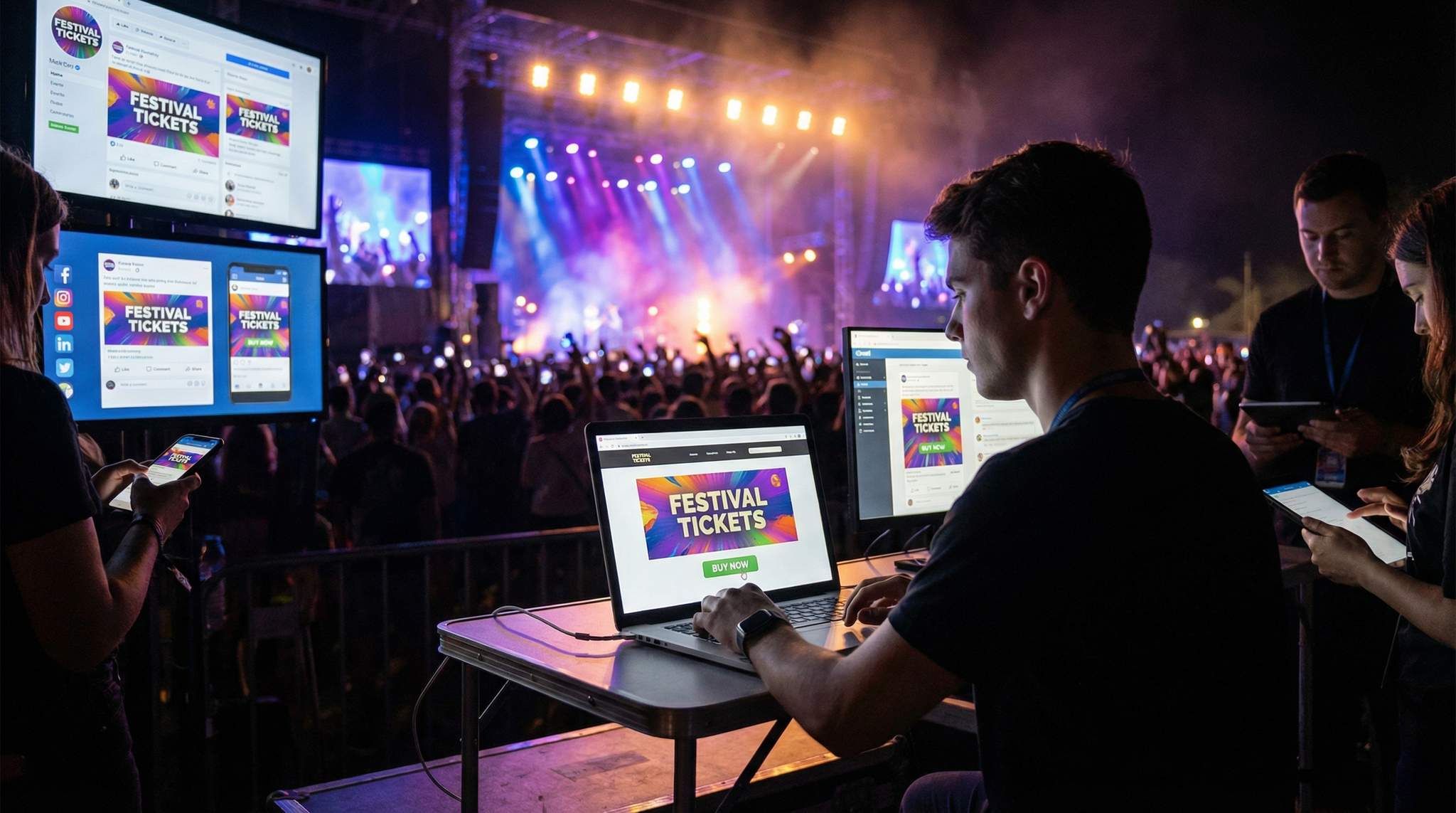
Think of your official event website or ticketing page as the central hub of information – it’s often the final stop before a curious fan converts into a paying attendee. All your online efforts (social posts, emails, ads) will be funneling people to this page, so it needs to shine. Make sure it reflects the vibe and professionalism of your event. That means high-quality visuals (photos or teaser videos from past events), compelling descriptions, and vibrant colors or graphics consistent with your festival branding. Your music event ticketing software selection page should instantly instill excitement and confidence about the experience you’re offering.
Data-Driven Event Marketing
Track ticket sales, demographics, marketing ROI, and social reach in real time. Exportable reports give you the insights to make smarter decisions.
Just as crucial as aesthetics is the content structure of your site. Relevant information (date, location, lineup highlights, ticket tiers, and prices) should be front and center. Many successful festival sites include a quick facts section at the top – when and where, headliners, and a big “Buy Tickets” button – followed by deeper details below. Make navigation simple: if you have multiple pages (e.g. for lineup, FAQs, camping info), ensure menus are clear and intuitive. And absolutely optimize for mobile. Industry data shows at least 60% of event-related emails are opened on mobile devices, according to email marketing ROI statistics, and similarly a huge chunk of fans will view your ticket page on their phone. A clunky mobile interface can cost you attendees; experienced organizers know that frustrated users will bounce within seconds. Test your page on various devices and make sure the ticket purchase process is smooth (no tiny text, no hard-to-click buttons, and no unnecessary sign-up hoops at checkout).
You should create a comprehensive music event page that serves as an information powerhouse. Use it to host your promotional content in one place – embed your aftermovie or a highlight reel, display an interactive site map if it’s a festival, and include testimonials or quotes from past attendees (“Best weekend of my life!”). These elements not only build excitement but also trust. Additionally, having an up-to-date FAQ section can save your team time by answering common questions (age restrictions, what to bring, refund policy) right on the spot. Experienced event planners will tell you that a confusing or sparse ticketing page can result in lost sales; on the flip side, a user-friendly page keeps people engaged and informed, making them more likely to follow through with a purchase.
Grow Your Events
Leverage referral marketing, social sharing incentives, and audience insights to sell more tickets.
Behind the scenes, ensure that your ticketing software or platform is reliable and can handle traffic spikes when sales go live. Nothing kills the hype like a website crash at the on-sale moment. Modern event ticketing platforms (like Ticket Fairy and others) also offer useful integrations – from waitlist and “notify me” features for sold-out tiers to real-time sales analytics and even built-in marketing tools. Take advantage of these. For example, enabling a waitlist on a sold-out ticket tier can help you gauge if there’s demand to add another show or stage. Likewise, integrating Google Analytics or tracking pixels (more on that next) into your site will let you measure where your visitors are coming from and which marketing efforts are paying off.
Warning: Don’t neglect keeping your ticketing page updated. If artist lineups change or new info comes in (say, a change in venue or a new safety guideline), update your site immediately. Outdated information erodes trust. Few things will frustrate an excited fan more than seeing a different lineup on social media than what your website shows, or not finding the details they were promised. Treat your event page as a living, breathing part of the campaign – it should evolve with every major announcement and always reflect the latest accurate info.
4. Clue in on pixels and analytics
One of the smartest moves you can make in digital marketing is to get data-informed. An easy way to understand your audience and keep track of your ticket sales is by monitoring sales data to stay on track. A “pixel” is typically a small snippet of code from platforms like Facebook (Meta), Google, or TikTok that you embed on your website or ticket page. It quietly collects information about visitors’ behavior and demographics – which ads they clicked, whether they attempted a purchase, etc. This might sound technical, but the payoff is huge: you gain visibility into your audience’s journey. Facebook/Meta pixels, for example, help you clue in on consumer interactions and measure conversions from your Facebook and Instagram ads. You’ll see data like “1000 people clicked our ad for the festival, 150 added tickets to their cart, but only 75 purchased.” Understanding these conversion funnels lets you adjust your strategy (maybe the checkout process needs streamlining, or perhaps you retarget those 75 who didn’t buy with a reminder or discount). When you’re marketing your music event or festival, the data collected by pixels can inform smarter decisions – you’re no longer guessing what your audience responds to, you know.
Pixels also unlock the world of retargeting. Ever notice when you visit a ticket page but don’t buy, you soon see an ad for that event following you on Facebook or other sites? That’s retargeting in action via pixels. It’s a gentle nudge to remind interested people, “Hey, those festival tickets are still waiting for you.” Industry pros rely on this because it’s effective – these folks showed intent, so an extra reminder often converts them. Beyond sales, pixels can reveal rich demographic info. You might discover, for example, that a huge chunk of your site visitors are from a city you hadn’t heavily targeted, or that a surprising percentage are coming via mobile vs desktop. Such insights help optimize your campaigns (perhaps you’ll boost your mobile ad spend, or create geo-targeted content for that city).
Automated Waiting Lists for Sold-Out Events
Capture demand when tickets sell out and automatically notify waitlisted buyers when tickets become available through cancellations or resale.
Importantly, use these tools ethically and strategically. Ensure you comply with privacy regulations (GDPR, CCPA, etc.) by informing users that you use cookies/pixels and giving opt-outs. Being transparent builds trust – savvy consumers appreciate events that respect their data. Also, don’t get lost in data for data’s sake. Focus on metrics that matter, like actual ticket conversions and engagement, rather than vanity metrics. As one events expert aptly put it, “Hype doesn’t pay the bills – tickets do.” You might have a million people watching your lineup drop video, but if those views don’t translate to sales, it’s not a successful campaign, as discussed in articles regarding festival presales and loyalty programs. Track the journey from initial outreach to final purchase to truly understand what’s working. In fact, the integration of data and even AI is becoming a game-changer in live events. According to Pollstar, AI-driven insights are now helping organizers make smarter decisions about everything from routing tours to marketing strategies, as detailed in their 2024 year-end executive survey. In the festival context, that could mean AI analyzing your pixel data to predict which users are most likely to buy VIP passes, or to optimize your ad targeting automatically. While you don’t need to be an AI guru, staying open to new data tools will keep you ahead of the curve.
Warning: Be careful not to fixate solely on the numbers and forget the human element. Data should guide you, not dictate every move. If your analytics say one thing but on-the-ground feedback says another (e.g., lots of page clicks but fans commenting that ticket prices are too high), take both into account. Balance quantitative data with real-world feedback – the sweet spot of decision-making in event marketing often lies in using data to inform creative, human-centered strategies.
5. Strategize a nurture sequence for your emails
Email is not outdated – in fact, it remains one of the most powerful direct communication tools for event marketing. Crafting an email marketing strategy (often called a “nurture sequence” or drip campaign) ensures that your prospective attendees get all the important updates right in their inbox, at just the right intervals. According to 94% of event teams, pre-event email marketing is the most important content they deliver, a figure cited in Bizzabo’s event marketing statistics. And it’s easy to see why: when someone joins your mailing list (say, by pre-registering or signing up on your site), they’re indicating genuine interest. An email lets you speak to them directly, without the distractions of a social media feed or the whims of an algorithm. Plus, the ROI on email is famously high – some analyses show an average return of $42 for every $1 spent on email marketing, based on comprehensive email ROI data, making it essentially the highest ROI channel in digital marketing.
So how do you harness email effectively for a music event or festival? By planning a nurture sequence from the first announcement all the way through post-event follow-ups. Start with a friendly “Welcome” email as soon as someone pre-registers or buys a ticket. Thank them for their interest, and maybe tease that more info is coming soon. As your campaign progresses, send periodic updates to keep that excitement building:
- Early Bird Drops: For example, an email announcing “Pre-sale starts next Wednesday – exclusive access for you!” This creates urgency and makes your subscribers feel special.
- Lineup and Content Reveals: When you unveil your lineup or headliner, your email subscribers should be the first to know. Include photos or links to artist playlists to get them pumped.
- Countdown and Info Blasts: As the event nears, send a “What You Need to Know” email: remind them of the event schedule, venue map, parking or transit details, and any last-minute tips. This is also a great place to plug merch pre-orders or on-site app features if you have them.
- Post-Event Thank You and Survey: After the event, close the loop. Send a heartfelt thank-you email to attendees, maybe with a highlight reel video from the festival and a link to a quick feedback survey. This not only shows you care about their experience, it’s also planting the seed for next time.
Such a sequence, spaced out over weeks or months, nurtures your relationship with the audience. It keeps your event on their radar and gradually increases their commitment. By the time tickets are about to go on sale (or the event date is approaching), your subscribers should feel like they’ve been along for the journey and can’t wait to attend.
Some insider tips: keep your emails concise, visual, and valuable. Use exciting subject lines (“Your exclusive pre-sale code awaits ?” or “Just Announced: Final Lineup Additions!”) to boost open rates. Segment your email list when possible – for instance, you might send slightly different messages to those who already bought tickets (focus on event prep info) versus those who signed up but haven’t purchased yet (focus on why they shouldn’t miss the event). Personalization counts too. Address recipients by name, and consider using data like past attendance (“Since you joined us in 2023, here’s what’s new this year…”). If you’re using a platform like Mailchimp, SendGrid, or the built-in tools with Ticket Fairy, all these segmenting and automation features are readily available.
Turn Fans Into Your Marketing Team
Ticket Fairy's built-in referral rewards system incentivizes attendees to share your event, helping events sell 20% more tickets and 30x ROI vs paid ads.
Crucially, don’t overdo it. There’s a fine line between keeping people informed and spamming them. Aim for a regular cadence (say, bi-weekly emails in early stages, moving to weekly or twice weekly in the final month as excitement peaks). Always deliver real value in each email – whether it’s news, a useful reminder, or a special offer. The last thing you want is recipients tuning out. If you maintain a helpful tone, your audience will actually look forward to your emails, rather than send them to the junk folder.
Warning: One common mistake in email marketing is blasting your entire list with every single update. Avoid one-size-fits-all emails that aren’t relevant. If people feel like they’re getting generic or too frequent messages, you risk unsubscribes or, worse, being marked as spam. Treat your communications as a two-way relationship – provide meaningful content and respect your audience’s inbox. It’s far better to have slightly fewer emails that are higher quality and targeted, than to bombard and annoy your potential attendees.
6. Build a network of links across your content
At this point, you have a robust social media campaign, a polished email strategy, and a stellar event page – now make sure they all work together. The various content pieces you release (tweets, posts, emails, press releases) shouldn’t exist in isolation on separate islands. The goal of a multifaceted digital strategy is to create an interconnected ecosystem where each platform boosts the others. In practice, this means always providing your audience a path to follow you elsewhere or to take the next step.
For example, in every email, include clear buttons or links to your social media pages – “Follow us on Instagram for live updates” or “Join our Facebook Event for meetup chats.” If a reader likes what they see, a single tap takes them straight to your socials. Conversely, on your social media profiles, make sure the link in bio points to your ticketing page or website. Platforms like Instagram and TikTok only give you one bio link – use it wisely (there are “link in bio” tools that let you link to multiple pages if needed). On Facebook or Twitter, whenever you post about the event, consider including the ticket page link or a call-to-action button. The idea is to reshare and interlink content so that no matter where someone encounters your marketing, they can easily dive deeper into the full event details or engage further.
Another smart tactic: repurpose content across platforms and link them. Did your team post an awesome behind-the-scenes video on TikTok? Share that on your Instagram Reels or Stories and add a “Swipe Up to Get Tickets” (on Instagram) or a caption with your ticket link. Going live on YouTube to answer fan questions? Promote it on your other socials and email the link to your list in advance. After it’s done, embed that YouTube Q&A video on your event website for anyone who missed it. Keep an eye on where your audience is most active and connect the dots accordingly.
Here are a few easy ways to weave a network of links through your content:
Free Tool: Split Tickets for Max Gross
Given capacity and a target price, the optimizer proposes Early Bird / GA / VIP allocations and prices — with projected gross at 100%, 80% and 60% sell-through.
- Email Footers: At the bottom of every newsletter or announcement email, add icons/links to all your social pages and a direct link to the event page. It’s an invitation for subscribers to continue the conversation on other platforms.
- Social Media Bios and Posts: Use your bios to link to your main event page. Periodically, share posts that explicitly remind followers where to get tickets (“? Ticket Alert: Head over to our link in bio to secure your spot!”). On platforms like Facebook, utilize the event page feature and include the ticketing URL there as well.
- Cross-Posting Videos and Photos: If you release a promo video on YouTube, share the YouTube link on Twitter and Facebook with a catchy snippet. If you have a great gallery of artist images on Instagram, consider posting a few on Facebook too, with a link to see more on IG or on your site. Cross-pollination helps capture fans who might only follow you on one platform.
- Influencer and Partner Amplification: If an influencer or partner venue is promoting your event, coordinate with them to include your official links. For instance, if a local radio station runs a contest for your festival tickets, provide them with a custom URL to the ticket page – that way, contest participants can easily find event info, and you can track that traffic.
The technical term for this is integrated marketing communications, but basically it means everything works in harmony. Not only does this drive higher traffic (someone might click from an Instagram story to your site, then from your site sign up for emails, etc.), it also reinforces your messaging. Repetition across channels helps it stick – a person might ignore one post, but after seeing your event mentioned on TikTok, in a friend’s Facebook share, and then in an email, they’re more likely to pay attention and act.
Finally, ensure tracking is in place for your links (you can use UTM parameters or trackable links) so you can see which channels drive the most traffic or sales. For example, you might discover your email link brought 500 site visits, while the Twitter link brought 300 but with a higher conversion rate. These insights allow you to fine-tune your focus for this event and gather learnings for future events. Synchronizing your content and linking across platforms isn’t just good for exposure – it gives you a holistic view of your campaign’s performance.
Bringing it all together, online marketing—when executed in a synchronized, multifaceted way—will ensure your music event or festival gets the right attention and keeps it. By building early hype, engaging fans on social media, creating a compelling ticketing hub, leveraging data insights, nurturing through email, and interlinking all these efforts, you’re covering the full journey from first discovery to post-event nostalgia. The goal of any marketing plan is ultimately to drive exposure and ticket sales for your event. In the digital age, that means expanding your methods and tools beyond traditional posters and radio spots into the vibrant, fast-paced online world where your audience lives.
Remember, authenticity and consistency are key. Fans can tell when an event brand has personality and passion behind it – share your experience, show behind-the-scenes peeks of the production, and be genuine in interactions. This builds trust, which in turn drives word-of-mouth (still one of the most powerful marketing forces, amplified by digital channels). Also, acknowledge the limitations and be ready to adapt: not every tactic will yield instant results, and that’s okay. Maybe your first TikTok attempt flops – learn from it and try something different. Maybe an email subject line underperforms – A/B test and improve for next time. The digital landscape evolves quickly (who could’ve predicted the rise of TikTok a few years ago?), so a trustworthy marketer stays curious and agile.
In summary, planning a multifaceted digital strategy isn’t just a fancy add-on to event marketing – it enhances every facet of promoting your music event. It’s efficient, it’s wide-reaching, and when done right, it creates a virtuous cycle of engagement: online excitement fueling real-world ticket sales, which then fuel more online sharing, and so on. Follow these steps, keep the experience of your attendees at the heart of your strategy, and you’ll set your event marketing up for success in 2025 and beyond. Now, go forth and make some digital noise – your future attendees are waiting to hear from you!
Frequently Asked Questions
How can I build hype for a music event before tickets go on sale?
Start building excitement months in advance by setting up pre-registration pages to gauge interest and collect attendee data. Offer exclusive perks like discount codes or merchandise to early sign-ups. Release teaser content such as lineup clues or behind-the-scenes footage to maintain engagement before tickets officially go on sale.
Why is a social media strategy important for music festival promotion?
A dedicated social media campaign is crucial because most audiences discover events through platforms like Instagram and TikTok. With 75% of festival-related posts driven by fans aged 17–34, tailored content and official hashtags aggregate user-generated content, significantly expanding digital reach beyond just the attendees physically present at the venue.
What are tracking pixels used for in event marketing?
Tracking pixels are code snippets from platforms like Meta or Google embedded on ticketing pages to collect visitor behavior data. They allow organizers to measure ad conversions, understand audience demographics, and execute retargeting campaigns that remind interested users to complete their ticket purchases, ultimately optimizing marketing spend.
How effective is email marketing for promoting live events?
Email marketing remains a highly effective tool with a potential return of $42 for every $1 spent. It allows for direct communication through nurture sequences, such as welcome messages, exclusive pre-sale access, and lineup reveals. Segmenting lists ensures relevant updates reach the right audience without relying on social media algorithms.
How should I optimize my event ticketing page for better sales?
Your ticketing page must serve as an information powerhouse with high-quality visuals, clear navigation, and mobile optimization, as 60% of event emails are opened on phones. Include essential details like lineups and FAQs, and utilize features like waitlists for sold-out tiers to maintain engagement and capture demand.
How do influencer partnerships benefit music festival promotion?
Partnering with social media influencers or local music bloggers expands reach into niche communities. By setting up referral programs or promo codes, organizers incentivize influencers to hype the event to their followers. This strategy generates organic viral content and leverages the trust influencers have established with their specific fanbases.